
Category Archives: Ebola
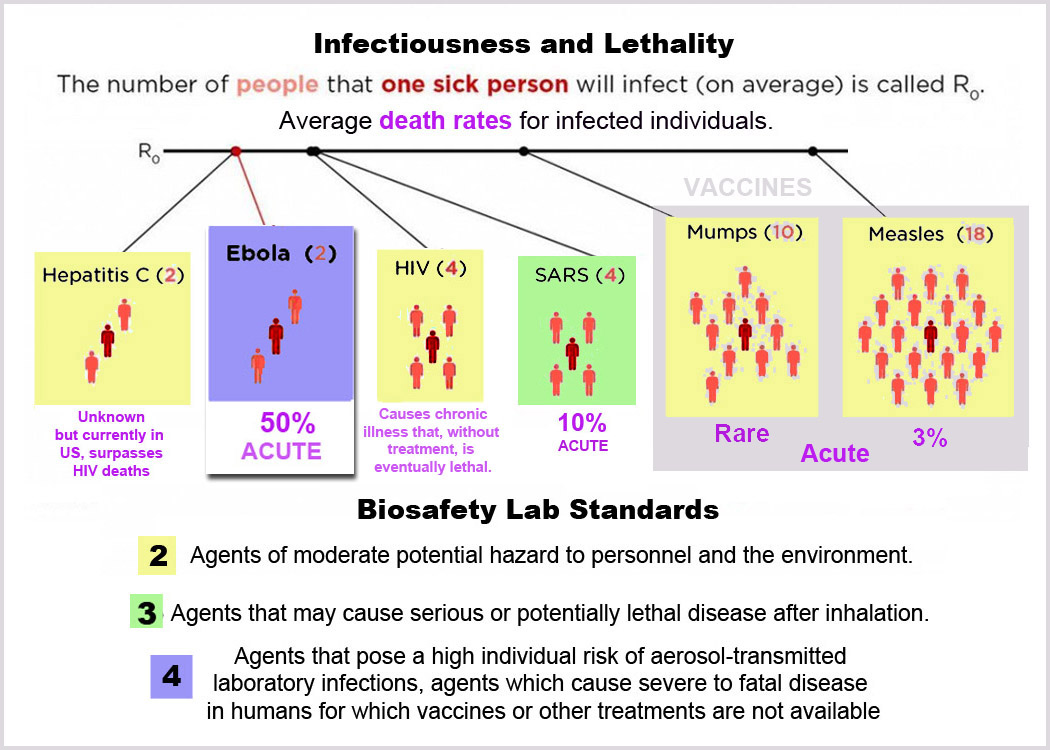
Infectiousness, Lethality and Biohazard Levels for 6 viruses
CHRONIC ILLNESSES
Hepatitis C virus persists chronically in the liver in about 85% of those infected. This chronic infection can be treated with medication. Overall, 50–80% of people treated are cured. The primary route of transmission in the developed world is intravenous drug use, while in the developing world the main methods are blood transfusions and unsafe medical procedures. No vaccine is available.
HIV is transmitted primarily via unprotected sexual intercourse, contaminated blood transfusions, hypodermic needles, and from mother to child during pregnancy, delivery, or breastfeeding. Some bodily fluids, such as saliva and tears, do not transmit HIV. There is no cure or vaccine; however, antiretroviral treatment can slow the course of the disease and may lead to a near-normal life expectancy. Without treatment, the average survival time after infection is 9 to 11 years.
ACUTE ILLNESSES, NO VACCINES
Ebola affects humans and other primates that causes an acute illness that is one of the most lethal on the planet. Fruit bats are believed to be a carrier and may spread the virus without being affected. Once human infection occurs, the disease may spread between people, as well. Male survivors may be able to transmit the disease via semen for nearly two months. Symptoms start two days to three weeks after contracting the virus, with a fever, sore throat, muscle pain, and headaches. Typically, vomiting, diarrhea, and rash follow, along with decreased function of the liver and kidneys. Around this time, affected people may begin to bleed both within the body and externally. The virus may be acquired upon contact with blood or bodily fluids of an infected human or other animal. Spreading through the air has not been documented in the natural environment. No specific treatment for the disease is yet available. Depending on the outbreak, lethality has been recorded at between 30% and 70%.
SARS (Severe acute respiratory syndrome) is a viral respiratory disease of zoonotic (animal) origin. Between November 2002 and July 2003, an outbreak of SARS in southern China spread rapidly to other countries, causing 8,273 cases and 775 deaths in multiple countries. As of 2013, there is no cure or protective vaccine for SARS that is safe for use in humans.
ACUTE ILLNESSES, VACCINES
Mumps typically starts with a few days of fever, headache, muscle aches, tiredness, and loss of appetite, and is followed by swelling of salivary glands. Before the routine vaccination program was introduced in the United States, mumps was a common illness in infants, children and young adults. It is now a rare disease in the United States. There is no specific treatment for mumps; most people recover fully, but some (particularly adults) may develop complications as serious as deafness.
Measles is caused by one of the most contagious viruses out there. In 1980, before widespread vaccination, measles caused an estimated 2.6 million deaths each year globally. Vaccination programs have resulted in a massive reduction in measles deaths worldwide. In 2012, there were 122,000 measles deaths globally. Death rate in infected individuals is 1%-3%, but the actual rate varies widely by age, health and quality of medical care.
Sources:
- Original chart modified by CtH @ http://www.ijreview.com/2014/10/183696-contagious-deadly-ebola-virus-compared-5-major-viruses-one-clear-chart/
- Biosafety levels @ http://en.wikipedia.org/wiki/Biosafety_level
- Hepatitis C @ http://en.wikipedia.org/wiki/Hepatitis_C
- Hepatitis C @ http://www.cdc.gov/hepatitis/statistics/2011surveillance/commentary.htm
- Ebola @ http://en.wikipedia.org/wiki/Ebola_virus_disease
- HIV @ http://en.wikipedia.org/wiki/HIV/AIDS
- SARS @ http://en.wikipedia.org/wiki/Severe_acute_respiratory_syndrome
- Mumps @ http://www.cdc.gov/mumps/about/index.html
- Measles @ http://www.who.int/mediacentre/factsheets/fs286/en/
- Measles @ http://jid.oxfordjournals.org/content/189/Supplement_1/S4.long
Comments Off on Infectiousness, Lethality and Biohazard Levels for 6 viruses
Filed under Ebola
A Few Ebola Facts
Transmission to humans from Ebola’s wild natural reservoirs is rare; outbreaks are often traceable to a single case where an individual has handled the carcass of a host animal. Human-to-human infection primarily has occurred only in individuals who have had contact with infectious patients or with their corpses. The disease has a 21-day incubation period.
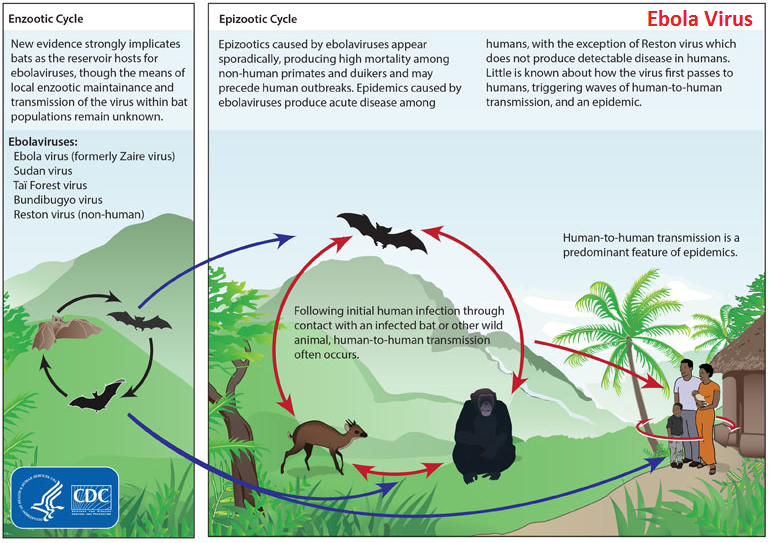
The virus was discovered in 1976; two outbreaks in 1972 were identified later based on antibodies in villagers’ blood and anecdotal evidence of the periods of sickness. Natural Ebola outbreaks prior to 2014 have been restricted to Central Africa.
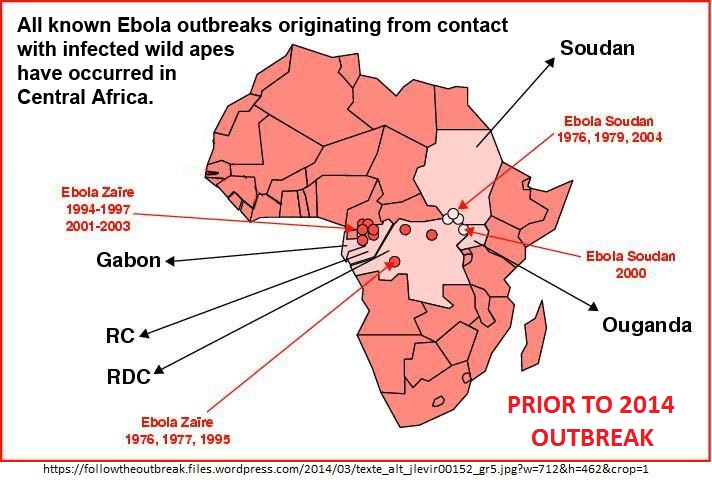
Naturally occurring outbreaks (confirmed cases/deaths among confirmed cases):
Gabon:
- 1994 = 52/31.
- 1996 = 37/21.
- 1996–1997 = 60/45.
Republic of the Congo:
- 2002–2003 =143/128, 35/29 (2 outbreaks)
- 2007 = 264/187.
Gabon/Rep. of the Congo (straddled border):
- 2001–2002 = 122/96.
Dem. Rep. of the Congo [aka, DRC; formerly Zaire]:
- 1976 = 318/280.
- 1977 = 1/1.
- 1995 = 315/254.
- 2008-2009 = 32/14.
- 2012 = 77/36.
- 2014 = 70/42 to date. Outbreak is on-going, but the virus is genetically unrelated to West Africa outbreak.
South Sudan:
- 1976 = 284/151.
- 1979 = 34/22.
- 2004 = 17/7.
Uganda:
- 2000–2001 = 425/224.
- 2007–2008 = 149/37.
- 2012 = 24/17.
Other known Ebola infections have been far less lethal.
- 1980-1990 = 7 people working with infected monkeys in Philippines/U.S. developed antibodies only.
- 1994 in Côte d’Ivoire = 1 scientist working with infected monkey tissue got sick, recovered.
- 1996 in South Africa = A doctor treating Ebola patients and the nurse who treated him got sick. He recovered; she died.
- 2004 in Russia = Lab accident, 1 sick/1 death.
- 2008 in Philippines = Ebola virus found in pig slaughterhouse. 6 workers developed antibodies only.
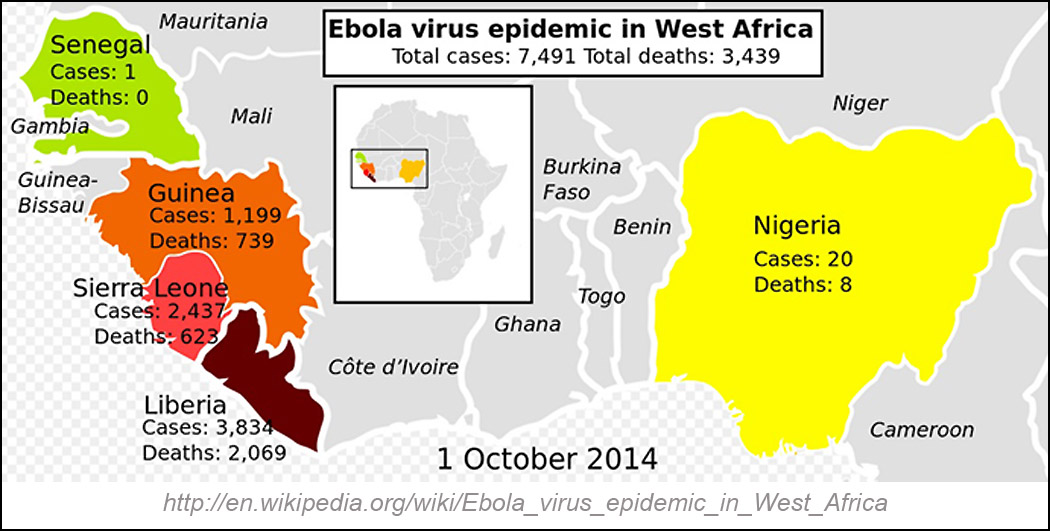
The 2014 Ebola Outbreak in West Africa (EOWV) has not followed the pattern.
- Other outbreaks have all been in CENTRAL AFRICA (Gabon, Republic of the Congo, DRC/Zaire, South Sudan, Uganda).
- EOWV started in Guinea and spread rapidly to four other nations in WEST AFRICA (Liberia, Nigeria, Senegal, Sierra Leone).
- The largest previous outbreak had a total of 425 cases (53% fatality).
- EOWV cases exceeded the sum of all previous known outbreaks in September and is not contained.
- Previous outbreaks were all contained and ended within the areas where they started.
- EOWV has jumped to capital cities and the UNITED STATES.
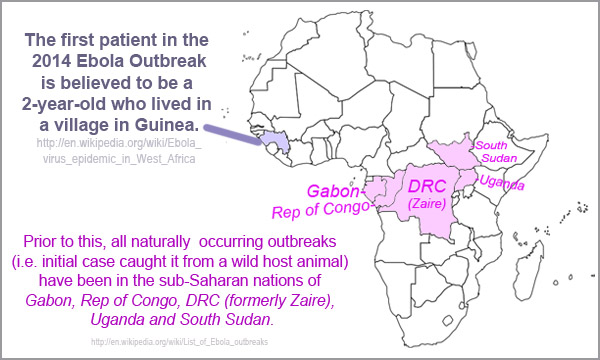
- December 2013: Researchers believe the index case was a 2-year-old boy who died in his home village in Guinea. The disease was misdiagnosed because Ebola had never been seen outside of the sub-Saharan nations listed above.
- March 2014: The outbreak had spread to Liberia and Sierra Leone.
- April 2014: Guinea’s Ministry of Health reported 25 health care workers had caught the disease; 16 had died.
- May 2014: The outbreak had spread to Guinea’s capital city.
- June 2014: The outbreak had spread to Liberia’s capital city.
- July 2014: The outbreak had spread to to Sierra Leone’s capital city and to Nigeria’s former capital city.
- August 8, 2014: EOWV was formally designated as a Public Health Emergency of International Concern.
- August 2014: A single case appeared in Senegal in a Guinea national who recovered.
- September 26, 2014: The WHO said, “The Ebola epidemic ravaging parts of West Africa is the most severe acute public health emergency seen in modern times. Never before in recorded history has a biosafety level four pathogen infected so many people so quickly, over such a broad geographical area, for so long.“
- September 30, 2014: A man who traveled from West Africa to Dallas, TX, is initially mis-diagnosed and sent home. He is currently in critical condition and his contacts are being monitored.
- October 1, 2014: EOWV continues with 7,492 suspected cases (4,108 lab confirmed) and 3,439 deaths (2,078 lab confirmed) to date. Many experts believe that these numbers are much lower than the actual outbreak, due in part to community resistance to reporting cases, and a lack of personnel and equipment to investigate reports of the disease.
- October 2, 2014: An NBC News cameraman helping to cover the outbreak in Liberia tested positive and is being treated.
Sources:
- http://www.ijreview.com/2014/10/183696-contagious-deadly-ebola-virus-compared-5-major-viruses-one-clear-chart/
- http://en.wikipedia.org/wiki/List_of_Ebola_outbreaks
- http://www.ncbi.nlm.nih.gov/pubmed/7441008
- http://en.wikipedia.org/wiki/Ebola_virus_epidemic_in_West_Africa
- http://en.wikipedia.org/wiki/2014_Democratic_Republic_of_the_Congo_Ebola_virus_outbreak
- http://en.wikipedia.org/wiki/Guinea
- http://en.wikipedia.org/wiki/Nzara,_South_Sudan
Filed under Ebola
Obama’s October Surprise: Ebola Comes to the U.S.
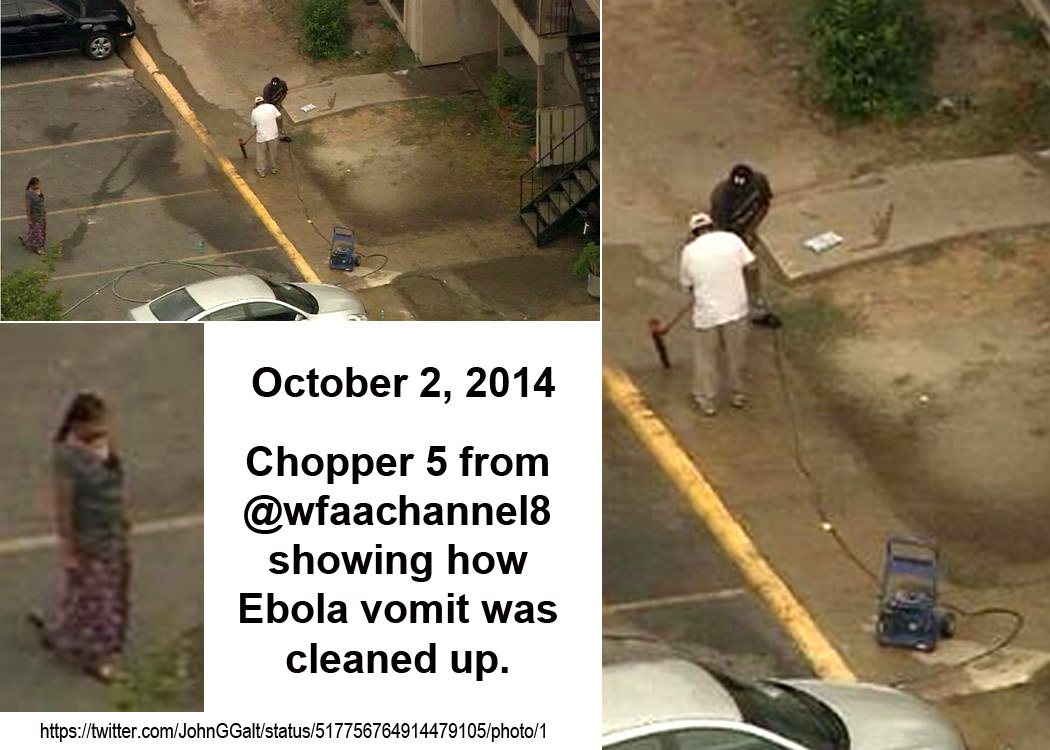
“October 2, 2014: UM, CALL ME CRAZY, BUT cleaning up Ebola vomit with a pressure washer seems like a lousy idea, with droplets blown into air and such. Note the absence of protective gear. Note woman in sandals standing next to runoff. Maybe they’d hosed everything down with bleach first. Somebody please tell me this isn’t as bad as it looks. . . . ”
Source:
Filed under Ebola
How would you Know if your Government were Telling the Truth about Ebola in Texas?
Heh! Trick question! When was the last time our government was completely truthful about anything? How’s your healthcare living up to promises lately? But seriously, if you want to know what they expect to happen after our first case of Ebola was confirmed by the CDC in Dallas, Texas, you should first look at what they say about it, and then look at how they act. Clearly, how they prepare – what they actually do – is a better indicator of what they believe than what they say.
What they say about the current situation in Texas can be summed up by CDC director Thomas Frieden’s statement yesterday as quoted by CBSDFW news in Dallas:
Several minutes into the press conference, Frieden paused and stated clearly, “The bottom line here is that I have no doubt that we will control this importation of this case of Ebola so that it does not spread widely in this country.”
Frieden did admit that it is possible that a family member or other person who had contact with the patient while he was infectious could develop Ebola in the coming weeks. But, he said, “There is no doubt in my mind that we will stop it here.”
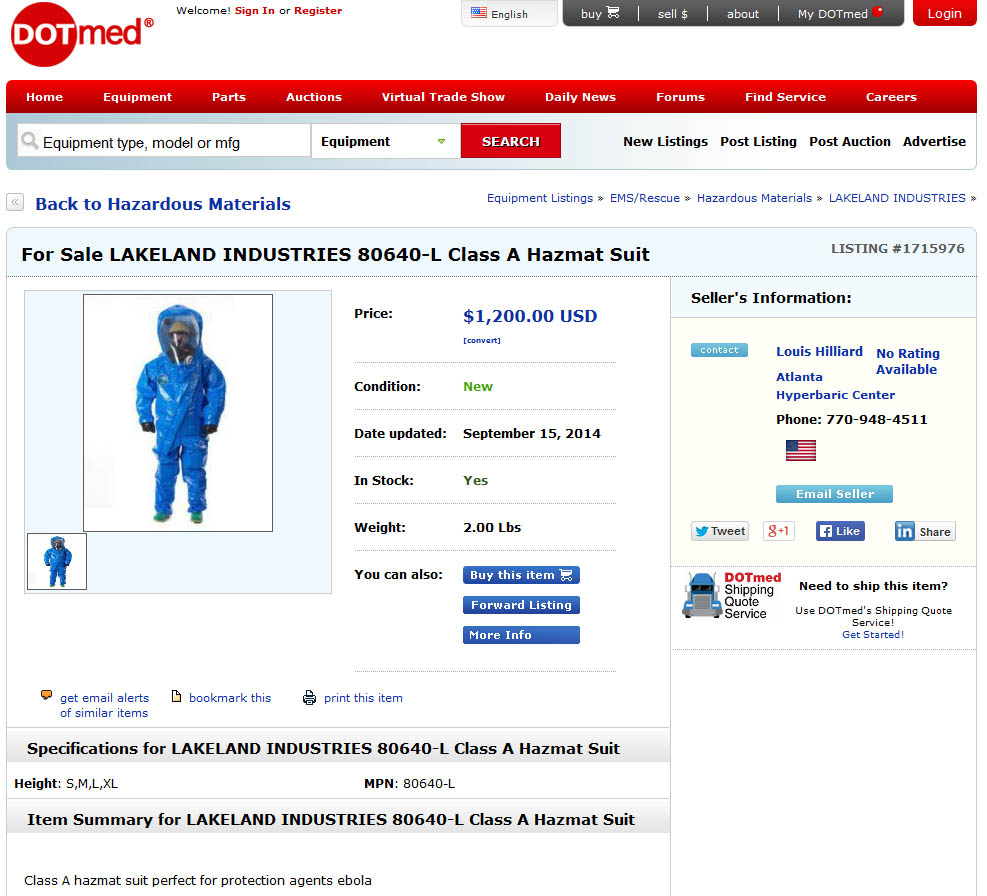
How they are preparing for what they really expect is indicated by a statement issued three weeks ago by Lakeland Industries, Inc. In their statement, they indicated that they were struggling to meet demand for “Hazmat Suits” specifically advertised for Ebola prevention, citing a single U.S. State Department bid for 160,000 suits. As ZeroHedge pointed out today, it’s not clear why the State Department has ordered so many suits of the kind usually chosen to work with airborne viruses, when their official statements indicate that Ebola is not airborne. Screenshot of Lakeland website below provided by ZeroHedge.
Filed under Ebola, State Department
Third American contracts Ebola
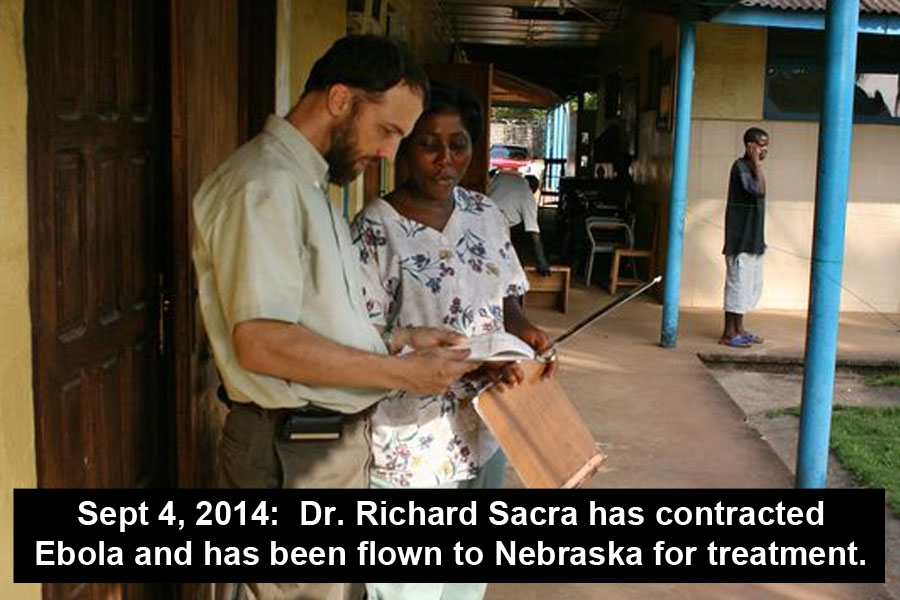
IF ONLY HE’D LISTENED TO OBAMA … who explains in the video below how EASY it is to avoid getting Ebola! Like, for example, you can’t get it sitting next to someone on a bus … unless that person is infectious and coughs, sneezes, sweats, bleeds, pees, poops or ejaculates on you and you happen to get any of their virus-laden body fluid in an open wound or orifice, in which case, yeah, you can totally get it sitting next to someone on a bus. And that garbage about how people aren’t infectious until they show symptoms? People who recover can remain infectious for 6-8 weeks afterward!
President Obama’s Message on the Ebola Virus [2:25]
As for Obama’s claim that HALF the victims recover … the World Health Organization begs to differ.
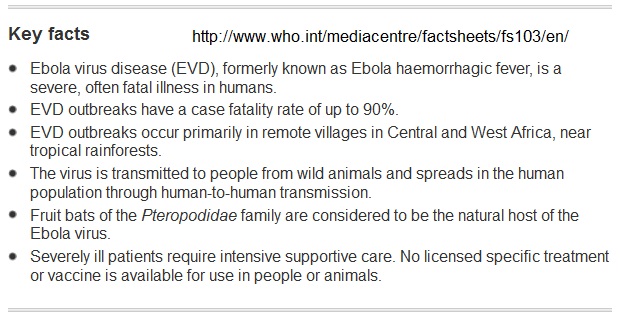
Source:
A really special kind of stupid
A 40-year-old man stole a $23 cell phone from a patient in an isolation ward in Uganda two weeks ago. He now has the Ebola virus that had hospitalized the phone’s owner.
Symptoms inclue rash, diarrhea, vomiting, bleeding and death. You really gotta wonder about a guy who had access to an isolation ward being THAT DUMB, KWIM? This is what these people have to wear to go in those places!
Source:
http://www.huffingtonpost.com/2012/08/27/ebola-phone-theft-steals-infected-patient_n_1832927.html
Comments Off on A really special kind of stupid
Filed under Ebola








 polination.blog