The most amazing lie in history: How a chicken farmer, a pair of princesses, and 27 imaginary spies helped the Allies win World War II

Only one man in history was both awarded the Iron Cross for his service to Nazi Germany AND also made a member of the Most Excellent Order of the British Empire by King George VI. That man was Juan Pujol Garcia, a draft-dodging chicken farmer and failed businessman from Barcelona who decided during World War II to become a double agent in order to help the Allies defeat Hitler. Here is his amazing story, as recounted by Lucas Reilly in Mental Floss:

In the weeks leading up to D-day, Allied commanders had their best game faces on. “This operation is not being planned with any alternatives,” barked General Dwight D. Eisenhower. “This operation is planned as a victory, and that’s the way it’s going to be!” Indeed, more than 6,000 ships were ready to cruise across the English Channel to plant the first wave of two million troops on the white beaches of Normandy. Nearly 20,000 vehicles would crawl ashore as 13,000 planes dropped thousands of tons of explosives and thousands of paratroopers.

The sheer size of the invasion—it would be the largest in history—was staggering. But so were the stakes. With the first day’s casualty rate expected to reach 90 percent and the outcome of World War II hanging in the balance, the truth was that Eisenhower was riddled with doubt. He’d transformed into an anxious chimney, puffing four packs of cigarettes a day. Other Allied leaders felt equally unsure. “I see the tides running red with their blood,” Winston Churchill lamented. General George S. Patton privately complained of feeling “awfully restless.” Chief of the Imperial General Staff Alan Brooke was more blunt: “It won’t work,” he said. The day before the invasion, Eisenhower quietly penciled a note accepting blame in case he had to order retreat. When he watched the last of the 101st Airborne Division take off, the steely general started to cry.

They were worried for good reason. With so many troops and so much artillery swelling in England, it was impossible to keep the attack a secret. Hitler knew it was coming, and he’d been preparing a defense for months. Only one detail eluded him, and he was confident in a Nazi victory if he could figure it out—he needed to know where, exactly, the attack would happen. To make D-day a success, the Allies needed to keep him in the dark: They’d have to trick the Germans into thinking the real invasion was just a bluff, while making it seem like a major attack was imminent elsewhere. The task seemed impossible, but luckily, the British had a secret weapon: a short, young balding Spaniard. He was the king of con men, an amateur spy gone pro, the world’s sneakiest liar. He was also, of all things, a chicken farmer.

The Allies’ top secret weapon.

Juan Pujol Garcia had been working at a hotel when he decided to become a spy. Although he was born to a wealthy Barcelona family in 1912, Pujol had squandered his privileges. To the disappointment of his family, he dropped out of boarding school at 15, eventually enrolling instead at an academy for poultry farmers. At 21, he served six months of mandatory military service, but army life wasn’t for him: The pacifist ditched the cavalry and bought a movie theater. When that venture failed, he bought a smaller theater, which flopped too. Success chronically eluded him. By 24, Pujol had resigned himself to working on a sinking chicken farm and marrying a girl he wasn’t sure he loved. His life was normal, if not boring.

But life in 1930s Spain was anything but boring. In 1931, King Alfonso XIII sensed his popularity crumbling and fled the country without formally abdicating, leaving Spain a political vacuum. Communist and Fascist groups violently fought for power. Bullrings became theaters for public massacres, and the corpses of politicians littered Madrid’s alleys.

When Spain plunged into civil war in July 1936, Pujol was supposed to report for duty, but he fled instead. He was soon caught and thrown in prison. Then, after unwittingly joining a jailbreak, he bolted to a safe house in Barcelona. He never saw his fiancée again. More than a year passed, and in 1938, a depressed and emaciated Pujol emerged from hiding. The escapee looked so bad, he was able to forge a document saying he was too old for the army. It would be the first of a growing snowball of lies.

Desperate for money, Pujol eventually landed a job managing a dumpy Madrid hotel ironically named the Majestic. The walls were grubby and the heating was shoddy, but in a certain sense, he had found a home. He was a passionate small-talker, and a hotel was a great place to meet people. And those people could be his ticket out of war-torn Spain.

One day, the Spanish Duke of Torre walked into the hotel and asked for a room. Pujol struck up a conversation about parties, which prompted the duke to complain that his aunts—two elderly pro-Franco princesses—were upset they couldn’t get their hands on any scotch since the civil war erupted. Pujol’s eyes lit up. He knew there was hooch across the border in Portugal. He didn’t have a passport—obtaining one was nearly impossible—but if anyone could get him one, it would be a pair of Franco-loving princesses.

So Pujol wagered the duke a deal: If he could procure Pujol a passport, then Pujol would procure some scotch. The royal agreed, and soon the Spaniard had his papers. He chauffeured the aristocrats into Portugal, bought six bottles of black market booze, and moseyed back into Spain with ease. Like that, he had a document that people killed, and were killed, for. He could escape.

The timing could not have been worse. There was nowhere safe to escape to. Weeks earlier, in September 1939, England had declared war on Germany. Hitler was beginning to gobble up Europe, and word of concentration camps had leaked past Spain’s censors. Pujol was trapped—and outraged. “My humanist convictions would not allow me to turn a blind eye to the enormous suffering that was being unleashed by this psychopath,” he wrote in Operation Garbo, a 1985 book co-authored by Nigel West. So instead of plotting his escape, Pujol began plotting schemes to help the Allies.

In January 1941, he walked into the British embassy and vaguely asked for a job as a spy. There was just one problem: He knew absolutely nothing about espionage. He floated from one embassy secretary to the next, talking in circles about “his services.” They offered their own services by showing him the door. Undeterred, Pujol returned home and fine-tuned his spiel. Then, he did the unthinkable: He called the German embassy and declared he wanted to spy for the Nazis.

The voice on the line was heavy and guttural. It told Pujol to go to the Café Lyon at 16:30 the next day—an agent in a light suit would be holding a raincoat in the back of the café waiting for him.

Pujol followed orders. He strolled into the café and introduced himself to an athletic, blue-eyed blond man sitting in the back. The agent greeted him with a cold nod. His code name was Federico, and he was specially trained to spot frauds. Pujol sat and started professing a devout—but false—love for Hitler and the New Order. The rant was cunning and bombastic. Off the top of his head, Pujol spun a rambling web of lies, rattling off names of nonexistent diplomats whom he claimed were friends. Impressed, Federico scheduled a second meeting.

Rendezvousing at a beerhouse, Federico told Pujol that the Nazi spy ring—the Abwehr—didn’t need more agents in Spain. Rather, they needed moles who could snoop abroad. Pujol beamed and told the recruiter about his passport. Federico nodded. A few days later, he told Pujol to go to Lisbon and charm the embassy into awarding him an exit visa. When Pujol got there, the embassy refused.

It looked like a dead end, but again, Pujol’s gift of gab proved handy. At his hotel in Lisbon, he befriended a portly, affable Galician man named Jaime Souza. On a night out together, Souza unveiled a document that made Pujol’s heart leap—a diplomatic visa. For the next week, Pujol accompanied Souza everywhere: amusement parks, nightclubs, cabarets, and, eventually, a casino. One afternoon, as the duo played roulette, Pujol pretended to double over with stomach cramps. He told Souza to keep playing while he ran back to the hotel. He raced to their room, opened Souza’s suitcase, pilfered the visa, and snapped a few photographs. Then, he returned to the casino floor as if nothing had happened.

Within days, Pujol had forged the document. Upon returning to Spain, he showed it to Federico: Pujol was in. The agent was so impressed, he took Pujol under his wing, stocking him with invisible ink, ciphers, $3,000 in cash, and a code name: ARABEL—Latin for “answered prayer.” His first assignment was to move to England, pose as a BBC radio producer, and crib British intelligence.
Pujol, of course, had no interest in actually spying for the Nazis. He wanted to be an Allied double agent. So instead of following orders to go to Britain, he went to Portugal. Confident the Allies would accept him now that he had access to German secrets, he dashed to the British embassy and showed them the ink, the ciphers, and the cash—he had everything a double agent needed. But the British reply was clear: “No.” Pujol was crestfallen. “Why,” he wondered, “was the enemy proving to be so helpful, while those whom I wanted to be my friends were being so implacable?”
Despite its name, Britain’s intelligence office was anything but. When the war began, the office was a factory of bad ideas. In 1941, it tried convincing the Germans that 200 man-eating sharks had been dumped in the English Channel. A year later, it seriously considered staging the Second Coming of Christ. (The plan was simple: A Jesus-like figure would magically appear across the German countryside, perform miracles, and preach peace.)

The decision to reject Pujol, however, was a matter of politics. The Allies wanted to keep Spain out of the war, so a Spanish double agent wasn’t enticing. Plus there was the minor detail that Pujol didn’t know a thing about England. He had never been there. He knew nothing about its military. He barely spoke the language. And now, in order not to blow his cover with the Abwehr, he had to convince the Nazis he was living there.

Without leaving Portugal, Pujol bought a map of England, a tourist guidebook, and a list of railway timetables—and began lying through his teeth. The Abwehr had told him to recruit subagents for help. Pujol had a better idea: He’d make them up. If something went sour, he could blame it on his imaginary employees. When something went right, he’d take the credit. With that, ARABEL started fabricating sources, spies, and stories. Using newspapers and telephone books as inspiration, Pujol wrote sprawling, baroque letters to the Abwehr that contained practically no useful information at all—they were just meant to waste the agency’s time. But Pujol knew he couldn’t keep up the ruse forever. If he wanted the Abwehr’s trust, he’d need to start sending some legitimate information. He asked for Britain’s help, but the embassy rejected him a fourth and fifth time.

Then, by chance, some of ARABEL’s reports struck too close to the truth. In one letter, he told the Germans that a convoy of five Allied ships had left Liverpool for Malta. Little did Pujol know, but the made-up report was, in reality, mostly correct. When Britain’s spy circle—the MI5—intercepted the message, agents panicked. A Nazi spy was loose in England! “The British were going crazy looking for me,” Pujol later recalled. He pulled a similar stunt weeks later, reporting that a major armada was departing Wales. This time, the convoy didn’t exist. But U-boats and Italian fighter planes scrambled to ambush it anyway, wasting tons of fuel and thousands of man-hours. Now this grabbed the Allies’ attention. In April 1942, the MI5 smuggled Pujol into London and hired him as part of its double-cross system. The Brits were so impressed with his ability to play a fervid Nazi, they code-named the amateur spy GARBO because, in their opinion, he was the best actor in the world.

As a bona fide double agent, GARBO’s network of imaginary spies ballooned. He enlisted a traveling salesman, a cave-dwelling Gibraltarian waiter, a retired Welsh seaman turned Fascist mercenary, an Indian poet nicknamed RAGS, an obsessive-compulsive code-named MOONBEAM, and even an employee at Britain’s Ministry of War. The bogus spies filed expense reports; some earned real salaries, all funded by the Nazis. By war’s end, GARBO had invented 27 personas. Working for the MI5 also meant that Pujol finally had real military information at his fingertips. So to build the Abwehr’s trust, he began giving away legitimate Allied secrets, peppering the reports with enough white lies to throw off the Nazis.

For example, during Operation Torch—the campaign to invade North Africa—three of GARBO’s imaginary agents reported seeing troops in Scotland, prepping for an invasion. (There weren’t any there.) The phantom agents spread rumors that Norway might be attacked, while others claimed that Dakar, Senegal, was next. The news confused the Nazis and kept them ill-prepared. To save face, GARBO wrote the Abwehr a letter one week before the true African invasion, detailing exactly when and where the Allies would attack. The information could have put thousands of troops at risk, except that the MI5 intentionally delayed the letter so it arrived one day late. The stunt saved lives and made GARBO look like an oracle.

Other stunts boosted his star power. When the Nazis wanted to bomb civilian trains in England, they asked GARBO for a train timetable. He sent an outdated one. When they wanted a book containing Royal Air Force secrets, GARBO mailed it in a cake with all the up-to-date pages deviously torn out. When Germans shot down a civilian plane between Portugal and London, killing everybody aboard—including Hollywood actor Leslie Howard—GARBO lambasted the Abwehr. One of his make-believe agents, a pilot, could have been onboard! Embarrassed, the Germans never attacked another civilian aircraft on that route.

By June 1943, Pujol had become one of Germany’s most prized spies. The Abwehr sent him new ciphers and vials of invisible ink—which made it easier for the MI5 to crack enemy codes. Meanwhile, the Nazis circulated a memo comparing him to a 45,000-man army. Pujol, who’d failed at school, at military service, and at business, was a virtuoso con man. And now, he had all of the ingredients he needed to cook up his biggest lie yet.

England’s country lanes were choked with troops. It was early 1943, and planes, jeeps, and tents were everywhere. Locals joked that the island would sink under all the weight. To German reconnaissance aircraft, it was obvious that something big was about to happen. GARBO’s job wasn’t to hide the impending French invasion—it was to convince the Germans that it was going to happen in Calais, 200 miles north of Normandy. If he succeeded, most of the Nazi soldiers would be waiting in the wrong place when the real invasion happened. But few people believed the ploy could actually work. Tricking Hitler, intelligence officer Ralph Ingersoll once said, was the equivalent of “putting a hooped skirt and ruffled pants on an elephant to make it look like a crinoline girl.”

To pull it off, GARBO had to convince the Nazis that a nonexistent million-man army was assembling in southeastern England. The imaginary army was given a real name: the First United States Army Group, or FUSAG. According to Stephan Talty’s book Agent Garbo, the British spared no effort or expense to make the hoax look legit. Inflatable decoys—mock tanks and boats—dotted harbors and farms. Fake hospitals were erected. Bulldozers plowed faux airstrips, and soldiers built hundreds of phony wooden aircraft. When a bogus oil plant was constructed near Dover, the Brits requisitioned wind machines from a movie studio to blow dust across the Channel to make the construction site more believable. Newspapers showed King George VI inspecting the artificial plant. Carrier pigeons were released in enemy territory with property of fusag IDs wrapped around their legs, and special machines stamped tank tracks along dusty roads. Newspapers published fake letters complaining about the ruckus all the imaginary soldiers were causing. And as the date of the real invasion neared, General Patton appeared across south-eastern England to rally the make-believe troops.
GARBO “sent” his best agents to southeast England to report on the activity. Meanwhile, other phony agents reported seeing bombers in Scotland, which made an additional attack on Norway look imminent. The reports made Hitler so nervous that he kept 250,000 much-needed troops stationed in Scandinavia. By May 1944, German High Command was utterly confused. Field Marshal Erwin Rommel was convinced FUSAG was real. Just before D-day, the Allies bombed 19 railroad junctions near Calais—and none in Normandy. Accompanied with GARBO’s reports, the bombings led most Nazi bigwigs to agree: All signs pointed to Calais.

At 6:30 a.m. on June 6, 1944, the first Allied troops stormed onto the sands of Omaha Beach, Normandy. D-day had begun. Although the first boats met a stiff resistance, the Nazis were relatively clueless. The German Seventh Army stationed nearby was snoozing in its barracks. General Hans Speidel had told both his armies to reduce their states of readiness because of gloomy weather. General Friedrich Dollmann was so convinced June 6 would be a slow day that he scheduled war games. Meanwhile, Rommel had taken the day off to celebrate his wife’s birthday. (The day before, as the Allies prepared history’s biggest invasion, he was picking wildflowers.) When Berlin learned that forces were landing in Normandy, the staff refused to even wake Hitler. The ploy had worked—almost nobody took the invasion seriously. Nazi brass thought it was a scheme to distract them from the real invasion—at Calais.

Two days went by. Tens of thousands more troops hit the beaches, and German generals still refused to send in serious reinforcements: They were still waiting for the fake army to attack. On June 9, a desperate General Gerd von Rundstedt begged Hitler to send the Panzers, the Axis’s fearsome tank squads. Hitler finally caved. This was terrible news for the Allies: The Panzers could cripple the invasion.

But early that morning, GARBO sent a message about the fake army that would change history: “I am of the opinion, in view of the strong troop concentrations in southeastern and eastern England, which are not taking part in the present operations, that these operations are a diversionary maneuver designed to draw off enemy reserves in order then to make a decisive attack in another place … it may very probably take place in the Pas-de-Calais area.”

The message was forwarded immediately to Berlin. Hitler’s personal intelligence officer underlined the word diversionary and handed it off to a higher official, who laid it on Hitler’s desk. The Abwehr chimed in confirming the information. Later that night, Hitler read GARBO’s message; shortly after, an order beamed from High Command: “The move of the 1st SS Panzer Division will therefore be halted.” Suddenly, nine of Germany’s meanest armored divisions—all bound for Normandy—stopped dead in their tracks and turned around to defend Calais.

It was GARBO’s greatest lie, and it arguably turned the tide of the war. The fake-out saved tens of thousands of Allied lives and secured a foothold on the continent. A month later, 22 German divisions were still waiting in Pas-de-Calais for the fake army. By December, when Allies had regained France, German commanders still believed FUSAG was real. Berlin was so convinced by GARBO’s reports that it awarded him an Iron Cross—an honor usually reserved for troops on the front line. Months later, the King of England followed suit and made Pujol a member of the Most Excellent Order of the British Empire—one of the nation’s greatest honors. The self-made spy became the first and only person decorated by both sides.
D-day was the beginning of the end. Hitler killed himself the next spring, and the Abwehr told GARBO to give up—they’d never realized they had a double agent on their hands. By then, his network of phony agents had stolen £17,554—nearly $1 million to- day—from Nazi coffers. Soon, Pujol fled to South America to be, as he put it, “forgotten, to pass unnoticed and to be untraceable.” Four years later, the MI5 reported that he had died of malaria while exploring Africa.

But this too was another brilliantly executed lie—a rumor spread to shake off any vengeful Nazi loyalists. Pujol, then 36, was alive and well in Venezuela, where his life became boring and normal again. He married, had two sons, opened a book- store, and got a job with Shell Oil as a language teacher. He even tried going back into the hotel business, where, again, he failed miserably. He lived off the radar until 1984, when the enterprising journalist Nigel West found him after a decade-plus search. That year, a 72-year-old Pujol returned to London for an emotional reunion. His former MI5 colleagues were gobsmacked. “It can’t be you,” one of them burst. “You’re dead!”
West took Pujol to Omaha Beach for D-day’s 40th anniversary. When the spy saw the cemetery—with its long, neat rows of white headstones—he dropped to his knees and burst into tears. He felt responsible for each grave. But as the day wore on, word circulated that Pujol was there. Hordes of gray-haired men flocked to him, begging to shake his hand. One man, surrounded by family and fellow veterans, took Pujol by the arm and beamed. “I have the pleasure of introducing GARBO, the man who saved our lives.” Again, tears flooded Pujol’s eyes. This time, though, he smiled.
Leave a comment

Filed under Loose Pollen

Bits & Bytes

CALI: [16:09] – Dems are losing their stranglehold on the once-golden state.

IRAN: CLICK https://www.youtube.com/shorts/vNNSKW2vswk for a quick update on the cease fire.

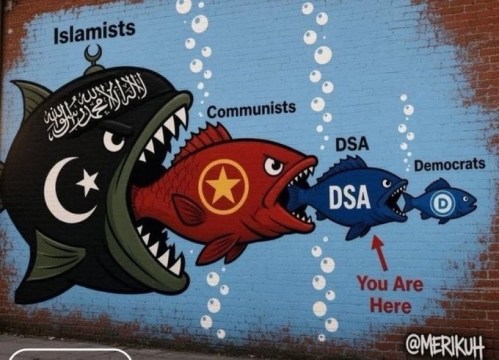
LIBERAL LOGIC: “Islam has a problem with gays, Jews, Sikhs, Christians, Buddhists, Hindus, women, non-Muslims, atheists, apostates, beer, wine, bacon, and dogs. But if I have a problem with Islam, I’m the bigot & Islamophobic? Can you see how ridiculous it is?

NEW YUCK CITY: CLICK https://www.youtube.com/shorts/MAVYVbOexS8 [1:39] to hear what Mamdani is doing. One commenter noted, “He was a councilman before he became mayor so he was well aware of the bullshit he was peddling.” Another predicted, “They also will cap rent so landlords can’t pass the additional cost onto renters. Once landlords get behind, they will foreclose on the properties and turn them into city-provided housing. This is already a stated plan.”

Leave a comment

Filed under Loose Pollen

A Tiny Bit

This morning, PT Hannah retired my walker. I am now using only a cane or, if I feel safe enough, nothing at all!

That’s it for today! Apparently, all of my energy is going into healing my knee, cuz my brain is fairly useless.

Photos are from the Mascot’s garden. They’ve already harvested a few strawberries! 🙂

1 Comment

Filed under Loose Pollen

Bits & Bytes

DAILY PRAYER: Dear Lord, Fill us with a passion for sharing the gospel. In Jesus’ Name, we pray. Amen.

AMERICAN HISTORY: On June 3, 1943, an Irish weather observer named Maureen Flavin carried out what she thought was just another routine task. It was her 21st birthday. Stationed at a remote post in Blacksod Bay, she recorded her hourly barometer reading and passed it along to Dublin, unaware that her small data point was about to ripple far beyond the Irish coast. The pressure drop she noted was subtle but unmistakable, an early warning of a powerful Atlantic storm forming to the west.

That reading quickly moved up the chain, eventually landing on the desks of Allied meteorologists who were desperately trying to forecast conditions for the largest amphibious invasion in history. Their models were uncertain, their data incomplete, and the stakes almost unimaginable. Flavin’s report provided the missing confirmation: a violent storm was on its way, one that would have turned the English Channel into a death trap for thousands of soldiers. When the information reached General Dwight D. Eisenhower, it forced a decision that would define the course of the war.

On June 4, 1944, Eisenhower postponed the invasion, an extraordinary gamble that hinged on a single window of improved weather predicted to follow the storm. That window arrived, and on June 6, D-Day began. The success of the landings has been attributed to strategy, bravery, and logistics, but it also rested on the quiet precision of an Irish woman who never imagined her routine reading would help shape history. Maureen Flavin’s small act of diligence became one of the most consequential weather observations ever recorded.

ISLAM: “There’s a simple way for any country led by rational rulers to ban Islam. All you have to do is to ensure that the definition of ‘religion’ has the explicit requirement that in order to qualify as a religion (with all the perks that this confers), the religion cannot, in any way, punish apostasy. That’s all you need. If a potential ‘religion’ explicitly punishes people for leaving it, then it automatically qualifies as a ‘cult,’ not a religion, and loses all of the protections afforded to real religions. So unless Islam changes its holy texts to freely allow people to leave Islam without penalty or consequences, it cannot be qualified as a ‘religion.'”

PRAYER for OUR NATION: Dear Lord, Have mercy on us and on those who have died for our freedom. In Jesus’ Name, we pray. Amen.

3 Comments

Filed under Loose Pollen

A Bit

This should make y’all smile!

Leave a comment

Filed under Loose Pollen

I’m baaack! Sort of …

The x-rays aren’t mine, but mine look similar. The solid white parts are metal and, in the gap, is a plastic plate to reduce friction.

I got my 38 stitches out and have had check-ups with my primary and with the ortho surgeon’s NP. Both were very happy with how well I’m healing.

My big job now is to “model” my scar tissue so it allows my new knee to fully bend and fully straighten. “Model” is a nice way of saying “rip out the scar tissue we don’t want” … over and over and over.” So fun! (not)

4 Comments

Filed under Loose Pollen

Memorial Day

Leave a comment

Filed under Loose Pollen

Happy Armed Forces Day


1 Comment

Filed under Loose Pollen

The Day Has Come

I’m posting this on Monday. By the time it appears, I’ll be in the OR, getting my bionic knee! If your someone you know is going to have this procedure done, I recommend the following YouTubes to help prepare.

4 Comments

Filed under Loose Pollen

Robert Morris would like a word

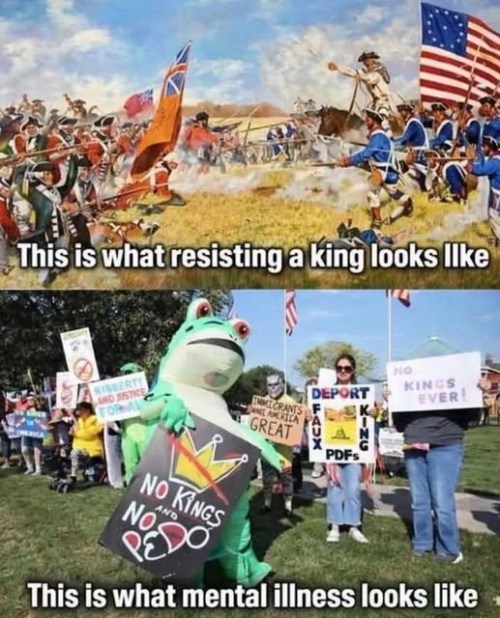
In May of 2026, Rep. Alexandria Ocasio-Cortez said, “The American Revolution was against the billionaires of their time. And we were declaring independence from such an extreme marriage of wealth and power in the state.

Robert Morris would like a word. Morris, by most accounts, the wealthiest man in the country in 1775, was a Philadelphia shipping merchant who had built a fortune from nothing. He had come over from Liverpool, England, at thirteen and apprenticed his way into a trading partnership that eventually became what one biographer calls “the first national conglomerate.”

He signed the Declaration of Independence, the Articles of Confederation, and the Constitution, making him one of only two men to sign all three founding documents. The other was George Washington, who held the title of wealthiest American president in history for over two centuries, with an estimated net worth of almost $600 million in today’s dollars.

When the Continental Congress needed someone to manage the country’s finances during the war, they turned to Robert Morris because he was the only person with the business network and personal credit to pull it off. What followed was remarkable.

When Washington needed gunpowder, Morris smuggled it past British blockades. When the Continental Navy needed ships, Morris supplied three of his own. When Congress couldn’t pay its soldiers (which happened with alarming regularity) Morris issued what became known as “Morris notes”—personal IOUs backed by his own immense wealth that circulated as currency throughout the army for years. When Washington needed to move his forces south for the Yorktown campaign that effectively ended the war, it was Morris who came up with the money to make it happen.

For three years, Robert Morris personally financed the American Revolution out of his own pocket. His personal contribution to the war effort has been estimated at roughly $79 million of the total $101 million spent—numbers that are difficult to translate into modern equivalents but represent something close to everything he had.

Robert Morris died in modest circumstances in 1806, largely forgotten. The man who had funded the birth of a nation outlived his fortune by nearly a decade, but no evidence exists that he ever regretted his contribution.

And Morris and Washington weren’t anomalies. John Hancock, who presided over the Continental Congress and signed the Declaration in letters large enough to ensure King George could read it “without his spectacles,” was a wealthy Boston merchant whose fortune made him one of the most prominent men in the colonies. Charles Carroll, also a signer of the Declaration, was by some accounts the wealthiest man in America at the time of his death.

These were not desperate men with nothing to lose! They were men with enormous fortunes who looked at what the British Crown was doing and decided that natural rights, self-governance, and the principles of limited government were worth more than their own financial security or their lives—and then proved it!

The Revolution was about taxation without representation. It was about the right of a free people to govern themselves. It was about whether legitimate authority derives from the consent of the governed, or from whoever has the most soldiers. Those ideas came directly from John Locke, were refined by Jefferson and Paine and Madison, and were debated in pamphlets and town meetings for a generation before a single shot was fired at Lexington.

Wealth redistribution wasn’t a grievance in the Declaration of Independence. Punishing the successful wasn’t a principle of the Constitutional Convention.

The historical record on this is not ambiguous.

Leave a comment

Filed under Loose Pollen