I’ve been puzzling and puzzling over the last three Letters. The best I can come up with is that they are about our relationship with God, but that five and six (Sardis and Philadelphia) form a contrasting pair, while the last (Laodicea, pron. lay ahd ih cee’ uh), is something different that stands on its own in some very special way.
In the Bible, the number one usually means God, while two often refers to things that are either complementary or contrasting. E.g., Adam and Eve (male and female) vs. two thieves who died with Christ (one lost, one saved). To me, Sardis and Philadelphia seem to be mostly the latter (though some of those in Sardis have not “soiled their garments”).
5. Sardis: “You have the reputation of being alive, but you are dead. … I have not found your works complete in the sight of my God.”
6. Philadelphia: “You have limited strength, and yet you have kept my word and have not denied my name.”
5. Sardis: “If you are not watchful, I will come like a thief, and you will never know at what hour I will come upon you.”
6. Philadelphia: “Because you have kept my message of endurance, I will keep you safe in the time of trial.”
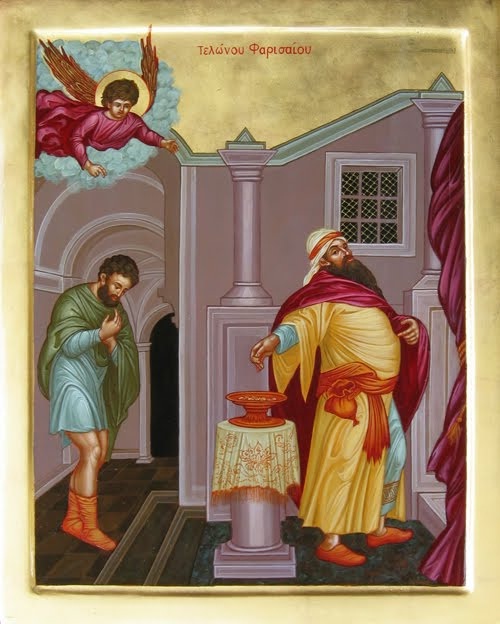
These remind me of the parable Jesus told of the Pharisee and the Tax Collector.
Luke 18:9-14 He then addressed this parable to those who were convinced of their own righteousness and despised everyone else. “Two people went up to the temple area to pray; one was a Pharisee and the other was a tax collector. The Pharisee took up his position and spoke this prayer to himself, ‘O God, I thank you that I am not like the rest of humanity—greedy, dishonest, adulterous—or even like this tax collector. I fast twice a week, and I pay tithes on my whole income.’ But the tax collector stood off at a distance and would not even raise his eyes to heaven but beat his breast and prayed, ‘O God, be merciful to me a sinner.’ I tell you, the latter went home justified, not the former; for everyone who exalts himself will be humbled, and the one who humbles himself will be exalted.”
Jesus describes Himself to Sardis as “The one who has the seven spirits of God and the seven stars.” The seven spirits represent God’s power and knowledge [Rev 5:6]; the seven stars represent the whole church [Rev 1:20]. IOW, He owns you and He knows you, you pompous poopy heads, and He is sooooooo not impressed with your fancy “pillar of the church” reputations! (Ouch.)
Jesus then describes Himself to Philadelphia as “The holy one, the true, who holds the key of David, who opens and no one shall close, who closes and no one shall open” and tells them, “I have left an open door before you, which no one can close.” Since He’s set up an Insiders vs. Outcasts scenario here, it means a lot that He has the key and He is keeping a door open. I also love how the Philadelphia victor will be made into “a pillar in the temple of my God, and he will never leave it again. On him I will inscribe the name of my God and the name of the city of my God … as well as my new name.” Wow!
Sardis and Philadelphia seem pretty straight-forward. But what about the last Letter?
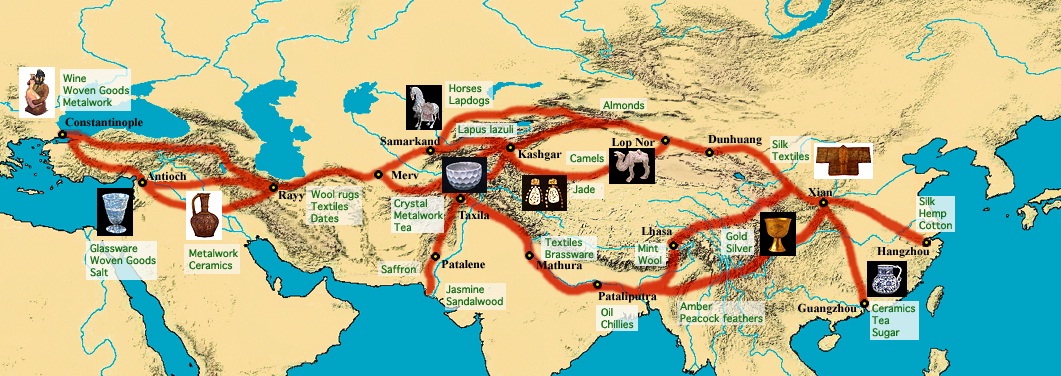
Laodicea (lay ahd ih cee’ uh) was a very wealthy city set at the crossroads of the major trade routes in the area. I find this crossroads position interesting. Coming from Philadelphia to the north, at Laodicea we have the choice to keep going straight south, which gets you down Israel way, or to turn left and go east. Both of these choices hook you up with the Silk Route in the East.
The other choice would be to turn right and go back to where we started at Ephesus, which I’ve been using for the church of the Apostolic Age. Geographically, the three choices work rather nicely with cold, hot and lukewarm imagery in the Letter. The “right turn” imagery back to Ephesus also works well with this:
Laodicea: If anyone hears my voice and opens the door, [then] I will enter his house and dine with him, and he with me.
Ephesus: To the victor I will give the right to eat from the tree of life that is in the garden of God.
Jesus describes Himself to Laodicea as “The Amen, the faithful and true witness.”
In the greeting section of the Book of Revelation, Jesus is described as “the faithful witness” who “is coming amid the clouds and every eye will see him”, a clear reference to the Second Coming at the End of Time. “Amen” comes at the end of a prayer and witnesses present testimony at a person’s trial, that is, after the events but prior to judgment. IOW, there’s a finality to all these images.
Plus, until now, there’s been a distance to the imagery, because the Letters are … well, letters. Letters get sent from a distance. Even at the sixth Letter to Philadelphia, Jesus says, “I am coming quickly”, which could be a message in a letter. But when he gets to Laodicea, he says,
“Behold, I stand at the door and knock.”
That is really up close and in person. Heck, my mail box is all the way down the driveway and across the street. My DOOR is right up on the porch, just a few feet from the living room. So I’m thinking maybe the Letter to Laodicea is addressed to the End Time church, maybe even to the post-Rapture church. But I want to go check out the last three Seals before I write any more. See you then!
I’m back with more gleanings from the opening chapters of Revelation.
I still feel comfortable with what I wrote about the First Fours (see Parts 14 and 15). In Scripture, four is for the created, three is for the Creator, and seven is everything. Based on this, I have been pondering the possibility that, if the first four Letters are about our relationship with earthly powers, the last three are likely to be about our relationship with God.
One thing I’ve noticed is that the urgency about Jesus’ return and Judgment increases as I read through the Letters.
Ephesus: I will come to you and remove your lampstand from its place, unless you repent.
Smyrna: Remain faithful until death, and I will give you the crown of life.
Pergamum: Therefore, repent. Otherwise, I will come to you quickly.
Thyatira: I have given her time to repent, but she refuses. [Earthly punishments.]
Sardis: If you are not watchful, I will come like a thief.
Philadelphia: I am coming quickly.
Laodicea: Behold, I stand at the door and knock.
The urgency was even more striking when I noticed that Ephesus and Sardis are matchers:
1. Ephesus: The one who holds the seven stars in his right hand says
5. Sardis: “The one who has … the seven stars says
1. Ephesus: I know your works, … that you cannot tolerate the wicked.
5. Sardis: I know your works, that you have the reputation of being alive, but you are dead.
1. Ephesus: You have endurance … and you have not grown weary.
5. Sardis: I have not found your works complete in the sight of my God.
1. Ephesus: You have lost the love you had at first.
5. Sardis: Remember then how you accepted and heard; keep it, and repent.
1. Ephesus: I will come and remove your lampstand.
5. Sardis: I will come like a thief.
Similarly, Pergamum and Philadelphia have remarkable similarities:
3. Pergamum: I know that you live where Satan’s throne is, and yet you hold fast to my name and have not denied your faith in me.
6. Philadelphia: Behold, I will make those of the assembly of Satan … come and fall prostrate at your feet, and they will realize that I love you.
3. Pergamum: You have some people there who hold to false teachings. Repent or I will wage war against them.
6. Philadelphia: Because you have kept my message of endurance, I will keep you safe in the time of trial.
3. Pergamum: To the victor I shall give a white amulet upon which is inscribed a new name, which no one knows except the one who receives it.
6. Philadelphia: I will inscribe on the victor the name of my God and the name of the city of my God as well as my new name.
3. Pergamum: I will comequickly.
6. Philadelphia: I am comingquickly.
Note: This could be, but doesn’t necessarily have to be about the Apocalyptic End Times. Every human not still alive today has already faced his/her personal “end time” and been called before God’s throne.
There’s something else about these warnings that bears mentioning. I’ve come across some who seem quite complacent about their eternal reward, as if belonging to a particular congregation or denomination or having once said certain words and performed certain rituals gave a person a “once for all” ticket to Heaven.
I don’t see Scripture supporting any such assumption.
In Phillipians 2:12, it says we must each work out our own salvation with fear and trembling.
And in John 8:31, Jesus says to Jews who believed in him that only IF they remained in His word would they truly be His.
2 Peter 2:20 says that if those who have escaped the defilements of the world through the knowledge of our Lord and Savior Jesus Christ, again become entangled and overcome by them, then their last condition will be worse than their first.
In 1 Cor 9:27, Paul says he drives himself hard for fear that, after having preached to others, he himself should be disqualified at the end.
Paul repeats this warning in the next chapter, verse 12: “Therefore let any one who thinks that he stands take heed lest he fall.”
Similarly, in the Letter to Ephesus, Jesus warns if we don’t repent, he might remove our lampstand (the symbol of belonging to Him).
In the letter to Thyatira, He sends horrible suffering in an effort to wake up sinners before it’s too late for them to repent.
In the letter to Sardis, the warning gets even more ominous. Jesus says “I will never erase [the victors] name from the book of life”, which suggests getting erased is possible. He also says He might sneak in like a thief and take our lampstand when we’re not paying attention.
Not paying attention? I’m reminded here of my sil who did not want a dog. Her dh and the kids swore themselves blue that they would love and cherish and honor that dog and that she would never have to do a single thing to care for it. After months of nagging the three of them, but getting stuck with doing everything for the dog anyway, she finally got fed up and gave it away. It was days before the rest of them noticed the dog was gone.
Dunno about you … but I don’t want to find myself facing the Throne of Judgment without the proper credentials lodged securely in my heart!
Over this series, I’ve mentioned my belief that, in order for my interpretation of the Letters to be valid, it had to apply to all seven of them in the same way. And I’ve told y’all my puzzlements over the last three, which didn’t fit the format I’d established for the first four. Today, when I gathered my Bible, yellow pad, sharp pencils and the all-important cuppa joe, I gave extra attention to my pre-Scripture reading prayer for insight. I’m sure the Lord provided; the real question is … did I hear Him correctly?
At the end of the fourth Letter, there is a kind of entr’acte that suggests the first four Letters are one group, while the last three are another. This possibility is supported by the parallels we saw with the Seals. There are seven Seals, but only four Seraphim and four Horses. So perhaps it does not negate my interpretations thus far that the last three Letters do not fit the pattern for the first four.
Entr’acte: [AWN tract] A pause between two parts of a stage production, often a place where a piece of music is performed.
I said in Part Three that each of the seven letters follows the same pattern:
Address “To the angel of the church in ___;
Description of the exalted Christ, author of the letter;
Lessons for the church;
Exhortation “Whoever has ears ought to hear what the Spirit says to the churches”;
Promise to “victors” – i.e., all Christians who endure faithfully to the end.
I got that wrong. In the first three Letters, the Exhortation “Whoever has ears” precedes the Promise to the “victors”; in the last four Letters, those two bits are reversed. This might suggest the Letters group up 3-4, not 4-3, as I am proposing, except for the Seraphim, Horses and this Entr’acte that appears at the end of the Letter to Thyatira [Rev 2:26-29]:
To the victor, who keeps to my ways until the end,
I will give authority over the nations.
He will rule them with an iron rod.
Like clay vessels will they be smashed,
Just as I received authority from my Father.
And to him I will give the morning star.
Whoever has ears ought to hear what the Spirit says to the churches.
Parts of this are straight out of Psalm 2. The majority of the Psalms were composed as songs for liturgical worship. We may speak these as poetry, but the early Christians sang them. And the Book of Revelation was clearly intended to be read aloud to the congregation. It says so right in the beginning:
Blessed is the one who reads aloud and blessed are those who listen to this prophetic message and heed what is written in it. -Rev 1:3
I’m guessing that Psalm 2, being a Messianic Hymn, would have been a particular favorite of the early Christians, most of whom were raised Jewish. In fact, it breaks itself down very easily into a little bitty oratorio. (See below for definition of oratorio. If anyone knows a better term for a piece of music like this that is “little bitty”, please share it with the class. Thanks!)
Imagine, if you will, that your congregation often performed Psalm 2.
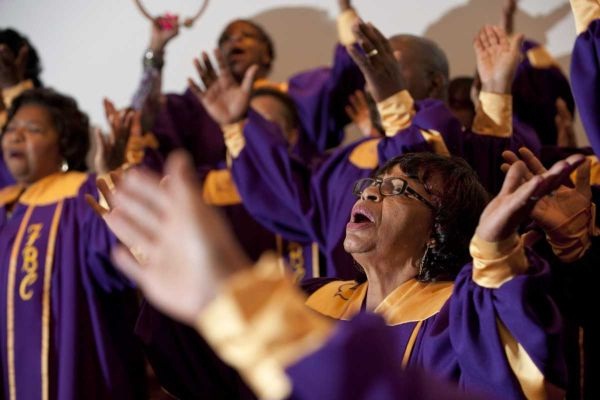
CHOIR:
Why do the nations protest and the peoples conspire in vain?
Kings on earth rise up and princes plot together against the LORD and against his anointed one:
CONGREGATION (PLOTTERS):
“Let us break their shackles and cast off their chains from us!”
CHOIR:
The one enthroned in heaven laughs; the Lord derides them,
Then he speaks to them in his anger, in his wrath he terrifies them:
BASS SOLO (GOD):
“I myself have installed my king on Zion, my holy mountain.”
BARITONE SOLO (JESUS)
I will proclaim the decree of the LORD, he said to me,
BASS SOLO (GOD):
“You are my son; today I have begotten you.
Ask it of me, and I will give you the nations as your inheritance,
and, as your possession, the ends of the earth.
With an iron rod you will shepherd them,
like a potter’s vessel you will shatter them.”
CHOIR:
And now, kings, give heed; take warning, judges on earth.
Serve the LORD with fear; exult with trembling,
Accept correction lest he become angry and you perish along the way when his anger suddenly blazes up.
CONGREGATION (FAITHFUL):
Blessed are all who take refuge in him!
Isn’t that beautiful?! And, if you’ve been following my blogs, you won’t have missed that the themes here are the same as those running through the first four Letters. My point here is that for first century readers and congregations, those lines at the end of the fourth Letter – while not identical or complete – would have been understood as parts of the liturgical song we call Psalm 2. It would be as if someone today were to plunk these lines into the middle of a sermon:
Amazing Grace! What a sweet sound.
I once was lost, but now am found.
Even if the reader didn’t actually sing the lines, it would be almost impossible for him not to speak them in the song’s cadence or for the congregation to not comprehend that the couplet referenced the entire song.
Consider the impact of the whole of Psalm 2, especially coming on top of the first four Letters. Then add this bit:
Just as I received authority from my Father.
And to him I will give the morning star.
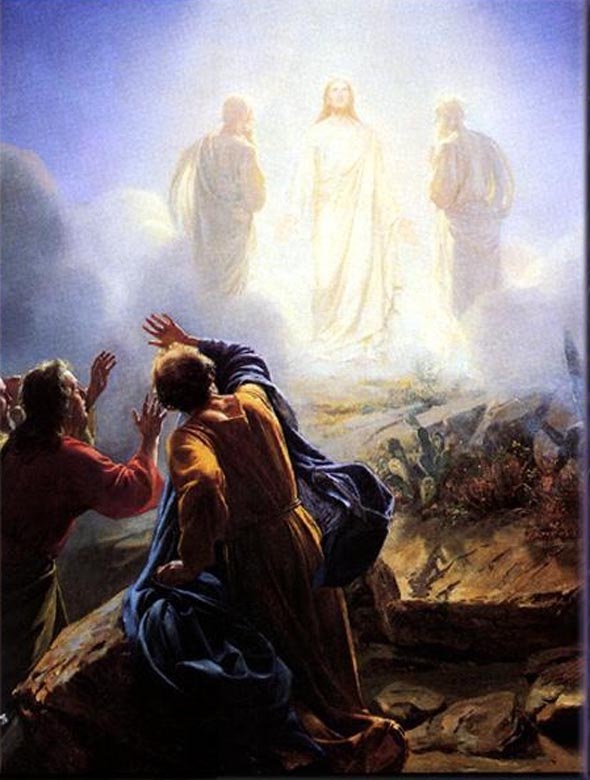
That reference to the “morning star” is from 2 Peter 1:12-21 in which the Apostle Peter says, “I will always remind you [that] we did not follow cleverly devised myths when we made known to you the power and coming of our Lord Jesus Christ, but we had been eyewitnesses of his majesty.” Then, he describes the Transfiguration of Jesus:
For he received honor and glory from God the Father when that unique declaration came to him from the majestic glory,
“This is my Son, my beloved, with whom I am well pleased.”
We ourselves heard this voice come from heaven while we were with him on the holy mountain. Moreover, we possess the prophetic message that is altogether reliable. You will do well to be attentive to it, as to a lamp shining in a dark place, until day dawns and the morning star rises in your hearts.
Look again at the end of the Letter to Thyatira [Rev 2:26-29]. Do you see why I think it’s an entr’acte that sums up and emphasizes the major themes of the first four Letters? Can you imagine how potent it would be if the reader left off at the end of verse 25 and the church choir performed the last part like this:
BARITONE SOLO (JESUS)
To the victor, who keeps to my ways until the end,
I will give authority over the nations.
He will rule them with an iron rod.
Like clay vessels will they be smashed,
Just as I received authority from my Father.
BASS SOLO (GOD):
And to him I will give the morning star.
CHOIR:
Whoever has ears ought to hear what the Spirit says to the churches.
Introduction to the Psalms from the New American Bible (Catholic translation) – “The Hebrew Psalter numbers 150 songs. The corresponding number in the Septuagint differs because of a different division of certain Psalms. Hence the numbering in the Greek Psalter (which was followed by the Latin Vulgate) is usually one digit behind the Hebrew. In the New American Bible the numbering of the verses follows the Hebrew numbering; many of the traditional English translations are often a verse number behind the Hebrew because they do not count the superscriptions as a verse.” http://www.usccb.org/bible/scripture.cfm?bk=Psalms&ch=
An oratorio is a large musical composition in which a choir, soloists and an ensemble play various distinguishable characters, usually with an orchestral accompaniment. Unlike an opera, an oratorio is performed as a concert piece, without props or costumes. http://en.wikipedia.org/wiki/Oratorio
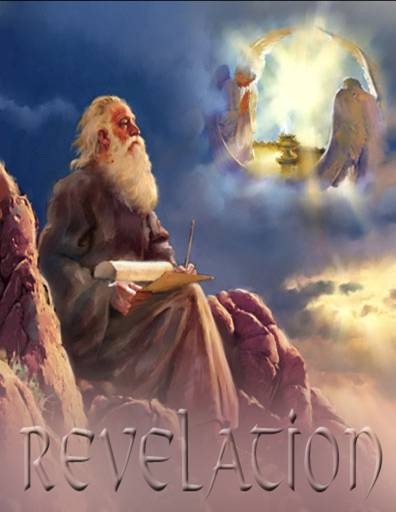
In Chapter One of the Book of Revelation (verses 10-11), John says a voice as loud as a trumpet told him to, “Write on a scroll what you see and send it to the seven churches: to Ephesus, Smyrna, Pergamum, Thyatira, Sardis, Philadelphia, and Laodicea.” After the last Letter, John says that he sees an open door to Heaven and again hears the voice like a trumpet inviting him to “come up here and I will show you what must happen afterwards.”
Since I’ve been exploring the idea that the seven Letters are about Church history from the Age of the Apostles to the End Times, I first thought “afterwards” meant “after the time of the last Letter.” E.g., Like maybe after the Rapture, something I hope happens BEFORE the Tribulation itself, especially if it’s soon enough that me and mine are still breathing air, since I’d way prefer we all get caught up together before the you know poo hits the you know fan.
Since I am trying to read the Scriptures to find out what they actually say, not read into them what I would prefer they say, but couldn’t make any headway with the last three Letters, I just kept reading those first four chapters over and over until I realized it makes more sense for “afterwards” to mean “after this vision is over” … which would put the beginning of the heavenly vision (i.e., the opening the Seven Seals) back at the time of the first Letter, when John wrote Revelation (mid-90s AD).
If this is a true interpretation, the opening of the first four Seals should mirror the time periods in the first four Letters we’ve already studied here. And maybe if that’s true, then the last three Seals will offer some insight into what the last three Letters mean. So, for the past few days, I’ve been studying those first four Seals. And, you know what? They DO mirror the first four Letters! Let’s look.
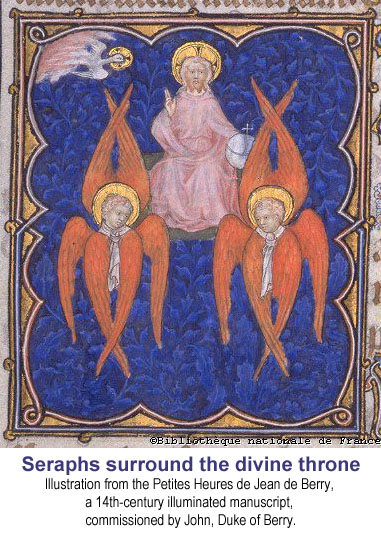
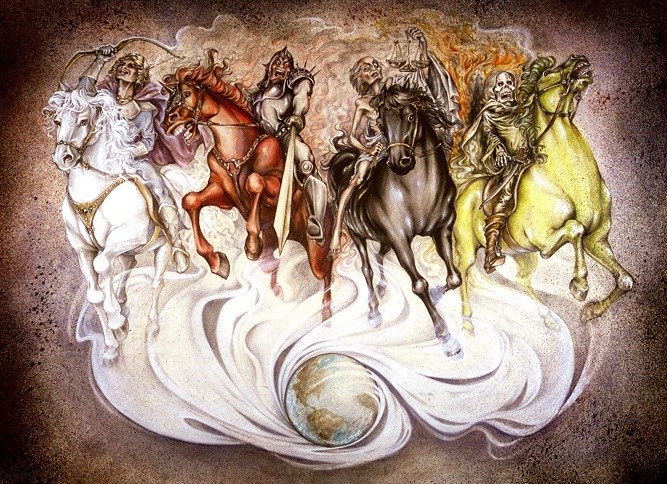
In the heavenly vision, John sees “four living creatures” around the throne, praising God day and night. [Rev 4:6-8] We know from Isaiah 6:1-2 that these creatures are Seraphim (or Seraphs, both are correct plurals for Seraph). In Rev 6:1-8, we watch Jesus break open the first four Seals and the four Seraphim call out the Four Horses of the Apocalypse.
Now, watch what happens when I link up my speculations about the first four Letters with the four Seraphim and the first four Seals.
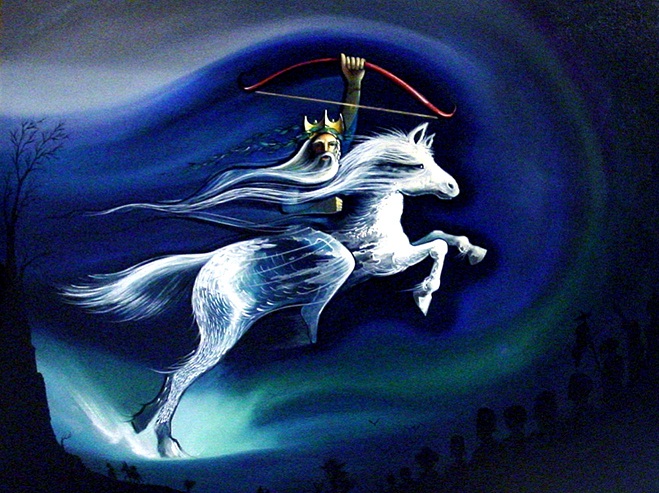
The Letter to Ephesus appears to be addressed to the faithful of the Apostolic Age and maybe also to those in later times when the political climate allowed Christians to teach and preach freely. This is mirrored by the symbolism of the First Seal.
Lion: Symbol of Jesus and the might and boldness of the righteous. See: Rev 5:5, Prov 30:30, Prov 28:1.
White: Symbol of Jesus at Transfiguration and the purity of those cleansed from sin. See: Matt 17:2, Psalm 51:7.
Bow: A bow and arrow is a powerful tool for military and hunting, with penetrating power and deadly accuracy even at a distance. But a bow is also likened to the tongue, which seems a more likely choice since the White Horseman has no arrows or quiver. See: Jer 9:3.
Crown: Symbol of victory. See: James 1:12.
“He rode forth victorious to further his victories.” This suggests the war has already been fought and won. In other words, Jesus is risen and now the Word of God goes forth to further victories.
SECOND
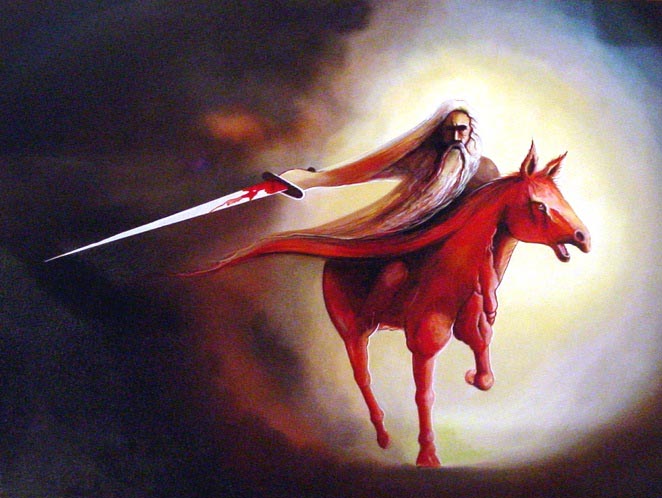
Letter: Smyrna. Seraph: Calf. Seal: Red, Sword.
The Letter to Smyrna appears to be addressed to the faithful of the 200 years of Roman persecution (roughly 100 to 313 AD) and maybe also to those in later times when political powers again warred against and martyred God’s people for their faith.
Calf: The Greek word here means a young female (heifer) or male (bull) cow and is sometimes translated as ox. Sacrificing bovines was an important part of Hebrew rituals. See: Genesis 15 (God seals his covenant with Abram); Leviticus 1 (The Law of Burnt Offerings); Leviticus 4 (The Law of Sin Offerings), Numbers 19 (Ashes of Red Heifer for ritual cleansing). When Jesus came, “He entered once for all into the sanctuary, not with the blood of goats and calves but with his own blood, thus obtaining eternal redemption.” See Hebrews 9:11-14.
Red: Blood. “Why is your apparel red, and your garments like one who treads the wine press? … Their blood spurted on my garments, all my apparel I stained.” Psalm 63:2-3
Sword: “Its rider was given power to take peace away from the earth, so that people would slaughter one another.”
THIRD
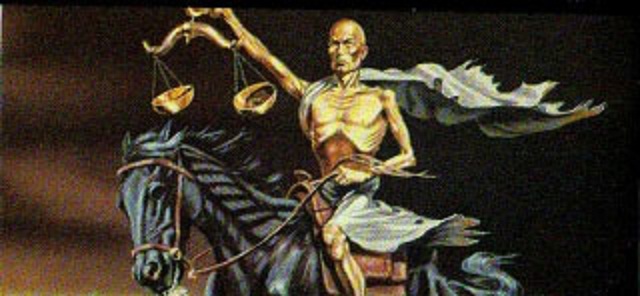
Letter: Pergamum. Seraph: Human Face. Seal: Black, Scale, Famine.
The Letter to Pergamum appears to be addressed to the faithful of the Early Middle Ages (roughly 313 to 1,000 AD) and maybe also to those in later times where poverty and famine were rampant.
Human Face: This one is kind of cryptic. The best I can figure is that famine is the most personal, up close and face-to-face of God’s “four evil punishments – sword, famine, wild beasts, and plague” [Ezek 14:21]. Wild beasts and disease are impersonal and there’s a frenzy and a heat to war that depersonalizes even hand-to-hand combat. But hunger is slow and very personal.
Black: In Lamentations 4:8-9, the color black is associated with famine. “Now their appearance is blacker than soot, they go unrecognized in the streets; Their skin has shrunk on their bones, and become dry as wood. Better for those pierced by the sword than for those pierced by hunger, Better for those who bleed from wounds than for those who lack food.”
Scale: A tool that measures stuff by weight. A voice tells the Black Horseman, “A ration of wheat costs a day’s pay, and three rations of barley cost a day’s pay.” In other words, during famine, food is sold at such an exorbitant price that one wage earner could barely keep himself alive, much less feed dependents.
Famine: Because of the political chaos, general poverty, and lack of food storage technology during the Dark Ages, people were very dependent on what they could actually grow in a year. Obviously, a single bad harvest meant people went hungry. But the Black Horseman of Famine received the cryptic limitation to “not damage the olive oil or the wine.” Remember when I talked about how the hidden manna (Part 8) and the white amulet (Part 9) in the letter to Pergamum worked well as symbols of Baptism and Eucharist? And then again (Part 11) when I talked about how I believe the Holy Spirit protected the doctrine of the Roman Catholic Church, even as He permitted wicked popes to sin? I think this limitation might be part of that. Olive oil has been used as part of the Baptism ritual from very early on. And wine, of course, is used for Holy Eucharist.
FOURTH
Letter: Thyatira. Seraph: Eagle in Flight. Seal: Pale Green, Death and Hades.
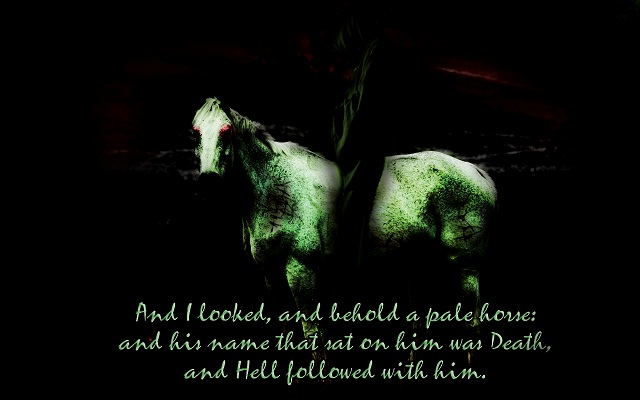
I looked at a number of Pale Horse paintings that depicted Death and Hades in various frightening forms, but the one I found the most creepy was the one above, where we can’t see the enemy.
The Letter to Thyatira appears to be addressed to the faithful of the Late Middle Ages (roughly 1,000 – 1,500 AD) and maybe also to those in later times where political and religious corruption led to enormous loss of life due to war, famine, disease and “the beasts of the earth” … which I’m thinking could extend to geological- and weather-related “beasts.”
Eagle in Flight: Eagles are very far-sighted and search for prey from heights of 1,000 feet or more. In other words, you can’t really see them coming. When one spots a likely victim, it drops suddenly and slams into its prey with incredible force and precision. An eagle in flight is a truly terrifying metaphor for any kind of enemy!
Pale Green: The skin color of a dead person. It also gets translated as ashen, pale, pale-colored, sickly pale. Dan 10:8 “No strength remained in me; I turned the color of death and was powerless.”
Death and Hades: “Its rider was named Death, and Hades accompanied him. They were given authority over a quarter of the earth, to kill with sword, famine, and plague, and by means of the beasts of the earth.”
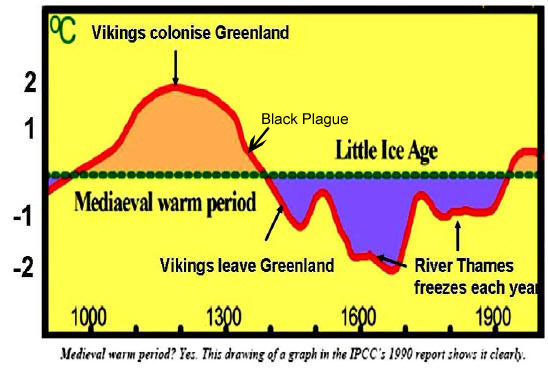
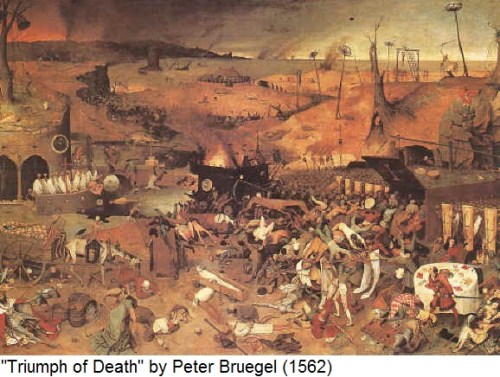
I briefly discussed the wars and Black Plague in the Late Middle Ages, but only today came across an article at Wikipedia about a huge famine that killed millions all across Northern Europe in the first half of the fourteenth century. Oddly enough, the famine was partly due to global climate change. (That would be prior to the widespread use of fossil fuels, Mr. Gore.) As you can see on this traditionally accepted climate graph (the one the Gore-acles have replaced wherever possible with their faked up hockey stick thing), our climate became quite a lot warmer and more comfy for all God’s creatures for an extended period called the Medieval Warm Period.
During this time, fewer people died before bearing children, so there was a growth in population, if not in political stability or food storage technologies. When the climate began to cool again, harvests shrunk, putting the pinch on for society’s poor, who at that time occupied about 95% of the population. Bad weather led to universal crop failures in 1315, 1316 and 1317; millions died and Europe did not fully recover until 1322. It was a period marked by extreme levels of crime, disease, mass death and even cannibalism and infanticide. The Black Plague hit a few decades later killing millions more.
I don’t know much about any deaths due to the usual “beasts of the earth” … apart from the kind that carried the Plague germs. But I think this phrase can be legitimately stretched to include natural disasters, of which I found a bunch listed at Wikipedia:
1091: London experienced Britain’s earliest reported tornado, which only destroyed London Bridge and a bunch of churches, but also more than 600 homes.
1117: A powerful earthquake that destroyed most of the buildings in Verona, Italy, was felt all across northern Italy and even in Switzerland.
1138: The deadliest earthquake in recorded history (outside of China where the top two happened) hit Aleppo in northern Syria. Aleppo was really not a good place to be at that time, what with the Crusaders and the Muslims having at it and buildings falling down all around.
1170: A catastrophic flood in the Netherlands drowned an entire forest and turned a freshwater lake into the salt-water Zuiderzee.
1287: Two massive storms actually reworked the coastlines of England and The Netherlands, leaving some towns that had stood by the sea landlocked, while others that had been inland on the shore.
1343: A huge earthquake caused significant damage and loss of life around Naples, plus set off a tsunami that destroyed ports all along the Amalfi Coast.
1404: A catastrophic flood hit Flanders, Zeeland and Holland, washing away islands and wiping out entire towns.
1428: Probably the worst earthquake in the history of the Pyrenees struck Catalan. The fallout lasted well over a year and the event remains a point of reference for the study of seismic risk.
That’s just SOME of the list of natural disasters from the Late Middle Ages. And we thought we had stuff to gripe about.
I still have no idea what the last 3 Seals or the last 3 Letters have to do with anything. If I figure it out, I’ll get back to you. 🙂
————
Sources:
Eerdman’s Handbook to the History of Christianity [Eerdmans Publishing, 1977]
The New Bible Dictionary [Eerdmans Publishing, 1962]
I was planning to blog next about the punishments section of the letter to Thyatira, but it’s not complicated enough to warrant an entire blog. The Black Plague killed 1/3 of the human population in the Catholic West during its massive and terrifying first outbreak (1348-1349), then recurred periodically in smaller outbreaks until antibiotics were discovered.
In 1354, the Muslim Ottoman Turks were able to push into parts of the severely weakened Europe and, in 1453, took down the Byzantine Empire. In Europe, where Christianity still prevailed, papal abuse of excommunication, interdiction and inquisition as political weapons had chafed Europe’s princes and kings to the point where they were more than ready to support any new theology that would free their faithful from the fear of damnation if they were cut off from Catholic priests and Catholic Sacraments.
Enter the Protestant Reformation … and my confusion with the last three letters.
It seems to me that in order for this “historical periods” thing to be a valid interpretation, it has to work for all seven letters. (I’m a big fan of Hercule Poirot.) The first two letters were easy; the second two just required some brushing up of my Medieval History. But for weeks now, I’ve been reading and rereading the Revelation letters, praying and puzzling over how the last three may or may not fit into my theory.
There is a strong “Church vs. State” theme in Revelation and this is certainly abundantly clear in the first four letters. But all of the Church-State situations I looked at post-1500 were simply reruns of one of the first four letters. For example:
Ephesus: In the first century, the Roman Empire was remarkably tolerant of both Judaism and Christianity, something that greatly assisted the spread of the Gospel in the decades following Christ’s Resurrection. In 1791, the United States officially established its famous wall keeping the government out of the affairs of any and all churches.
Smyrna:The Roman Emperors ceased to be tolerant toward stiff-necked monotheistic Christians and Jews, but they were hardly unique in the whole persecuting of non-conforming believers department. In the 16th c., the Spanish monarchs ordered non-Catholics to convert or leave, then financed the Spanish Inquisition to make it happen fer realsies, while in Protestant England, more than 300 Roman Catholics were executed for treason. In the 17th century, the Pilgrims (not Puritans as I first wrote, see comment below) who climbed on the Mayflower were hardly looking for economic opportunity or free health care when they emigrated to the New World. They were fleeing religious persecution.
Pergamum/Thyatira: In the Byzantine Empire, the Eastern Orthodox Church was subservient to the political ruler. In 1533, King Henry VIII broke with Rome, declaring himself head of the new Church of England. In 1721, the Russian Tsar Peter I actually abolished the Russian Orthodox Church as a separate entity and basically made it a department of his royal government.
Pergamum/Thyatira: In Europe, the Roman Catholic Church became a political power in its own right, then proceeded to prove the adage that power corrupts and absolute power corrupts absolutely. But we’ve seen the same again and again in the brutalities of Islamic governments throughout the centuries and in the massive body count racked up in every nation where atheistic Communism has ruled.
So where does this leave me with my theory? I’m honestly not sure. Yesterday, I noticed something that may give me some clues, but since I still don’t know what it all might mean, I’ll have to leave you hanging breathlessly for my next installment. 🙂
————
Sources:
Eerdman’s Handbook to the History of Christianity [Eerdmans Publishing, 1977]
The New Bible Dictionary [Eerdmans Publishing, 1962]
Various articles at Wikipedia (mostly to verify dates etc.)
UPDATE: I got this from a bloggy lister who gets my stuff via email.
Hi Chrissy,
I always enjoy reading your thoughts on the Seven Churches. I have one point of correction, if you will permit me. It was the PILGRIMS, not the Puritans, that sailed on the Mayflower. I know this because I am a Mayflower descendent.
The difference between the Pilgrims and Puritans was that the Puritans tried to purify the Church of England from within. The Pilgrims actually called themselves Separatists. They felt that the Church of England was so corrupt that it could not be purified from within, so they felt they had to separate from it.
I hope you have a VERY healthy and happy new year.
Please note that throughout this discussion, I assume Jesus is addressing all the people who proclaim Christ, not any denomination or sect.
Book of Revelation, Chapter 2, Verses 18-29:
To the angel of the church in Thyatira, write this:
The Son of God, whose eyes are like a fiery flame and whose feet are like polished brass, says this:
I know your works, your love, faith, service, and endurance, and that your last works are greater than the first.
Yet I hold this against you, that you tolerate the woman Jezebel, who calls herself a prophetess, who teaches and misleads my servants to play the harlot and to eat food sacrificed to idols.
I have given her time to repent, but she refuses to repent of her harlotry. So I will cast her on a sickbed and plunge those who commit adultery with her into intense suffering unless they repent of her works. I will also put her children to death.
Thus shall all the churches come to know that I am the searcher of hearts and minds and that I will give each of you what your works deserve.
But I say to the rest of you in Thyatira, who do not uphold this teaching and know nothing of the so-called deep secrets of Satan: on you I will place no further burden, except that you must hold fast to what you have until I come.
To the victor, who keeps to my ways until the end, I will give authority over the nations. He will rule them with an iron rod. Like clay vessels will they be smashed, just as I received authority from my Father. And to him I will give the morning star.
Whoever has ears ought to hear what the Spirit says to the churches.
I’ve introduced my idea about the seven churches being periods in church history; I’m not at all sure I’m right so take all this with pounds of salt. Please. That being said …
I propose here that the Revelation letter to Thyatira refers to the Late Middle Ages, roughly 1,000 AD – 1,500 AD.
The Late Middle Ages is often depicted as a spiritual wasteland, a time when the Church had lost its way and the Holy Spirit was MIA. Yet here Jesus commends the “church in Thyatira” saying,
I know your works, your love, faith, service, and endurance, and that your last works are greater than the first.
Note that He says “the first”, not “your first.” And where did we see His praise for “the first”? In the letter to Ephesus, of course. This interpretation holds up when you compare the two letters:
Thyatira: I know your works, your love, faith, service, and endurance.
Ephesus: I know your works, your labor, and your endurance.
What an absolutely extraordinary idea … that the love, faith and service of medieval Christians exceeded the labor of the first Christians of the Apostolic Age!
Eerdmans elaborates on page xv:
From the tenth century, spiritual renewal began to sweep through the Western world, starting with the foundation of the monastery of Cluny in central France in 910. … Among other things, the Cluniacs wanted to stamp out the practice of buying and selling church offices (simony), re-establish the celibacy of the clergy, and eliminate corruption from the church. …
Other new monastic orders replaced Cluny when it faltered in its reforming zeal in the eleventh century. Bernard of Clairvaux (1090-1153) and the Cistercians in the twelfth century, Francis of Assisi (1182-1226) and the Franciscans, and Dominic (1170-1221) and the Dominicans in the thirteenth century, were only the most prominent of dozens of new orders founded, dedicated to spiritual renewal and church reform.
Renewal and reform gave rise to a great new missionary thrust:
Missionaries to Denmark, Norway and Sweden revolutionized the Scandinavian way of life and stopped the Viking attacks that had terrorized Europeans for several centuries. Missionaries to the Slavic peoples introduced the faith to people in central, eastern and southeastern Europe and in northern and central Asia including Bohemians, Poles, Hungarians, Wends, Pomeranians, Lithuanians, Prussians and the Baltic peoples. The Russians were evangelized by Eastern missionaries who founded what was to become the Russian Orthodox church based in Moscow.
Franciscan friars preached in Persia, India and China. Eerdmans says (p 299):
Their journeys met with such success that early in the fourteenth century a chain of Christian missions extended from Constantinople to Peking, and it seemed at one time as if even the Mongol rulers might accept the Christian faith. This promising beginning did not lead to permanent results, however, since the western Mongols became Muslims and prevented the missionaries from travelling through their territories.
The excellence of the Medieval Church’s works, love, faith, service and endurance can also be seen in the areas of education, art, health care and relief for travelers and for the poor.
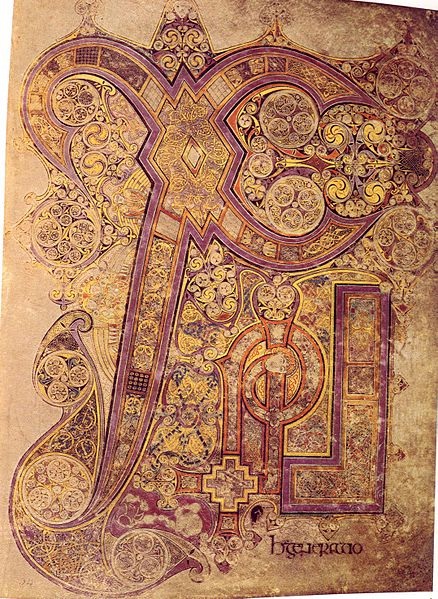
During the dismal Dark Ages following the fall of the Roman Empire, culture, art and learning were in very short supply in Europe. For centuries, the only education to be had was in Catholic monasteries where the monks preserved and advanced learning by hand copying decaying books and creating amazing works of art like this page from the Book of Kells, an illuminated manuscript of the four Gospels that was created by Celtic monks ca. 800 or slightly earlier.
Music also owes a debt to the Medieval Church, which invented the notation and theory that shaped the great flowering of western music. Christians still perform and are inspired by Gregorian chant, possibly the earliest form of sacred Christian music that survives.
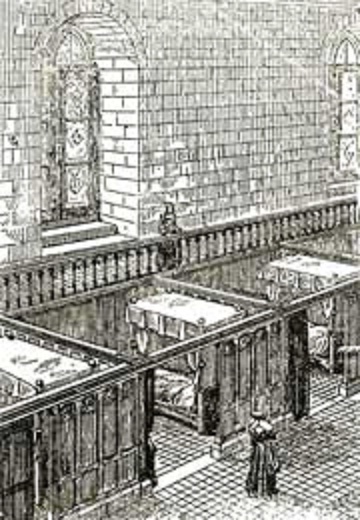
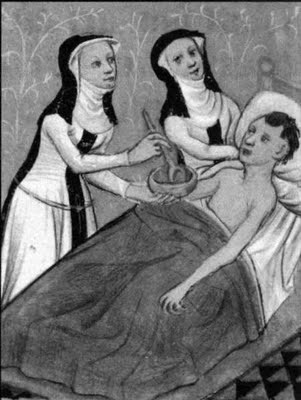
Monasteries also operated hospices for travelers, nursing homes for pregnant women and the elderly, and orphanages for homeless children. The first medical school of modern history was founded in a 9th century monastery in Salerno, Italy, where Arabic and Greek treatises were studied and careful clinical observations and serious experiments for the cure of disease were made. Both men and women taught and studied at Salerno, whose graduates were unrivaled for the quality of their care. One of the most important books of Medieval medicine that we have from the 12th Century was written by St. Hildegarde, a Benedictine Abbess. We also have records of fine hospitals built in the 13th century that were clearly designed for good ventilation and sanitation, having high ceilings, large windows, tile floors, and an abundant water supply nearby for cleaning and sewage removal.
During the 12th and 13th Centuries, the period of the Crusades, the activity of the Knights Hospitaler led to the formation of many hospices to care for sick and needy pilgrims. During the 14th century, Christian charity rose to heroic levels during outbreaks of the contagious and deadly Bubonic Plague. For example, Catherine of Sienna in Italy and countless other religiously inspired individuals there as well as in France, Germany, Poland and elsewhere served to alleviate pain and provide spiritual comfort.
All in all, I’d say it is not so surprising that Jesus commended the “church in Thyatira” so highly!
————
Sources:
Eerdman’s Handbook to the History of Christianity [Eerdmans Publishing, 1977]
The New Bible Dictionary [Eerdmans Publishing, 1962]
Please note that throughout this discussion, I assume Jesus is addressing all the people who proclaim Christ, not any denomination or sect.
Book of Revelation, Chapter 2, Verses 18-29:
To the angel of the church in Thyatira, write this:
The Son of God, whose eyes are like a fiery flame and whose feet are like polished brass, says this:
I know your works, your love, faith, service, and endurance, and that your last works are greater than the first.
Yet I hold this against you, that you tolerate the woman Jezebel, who calls herself a prophetess, who teaches and misleads my servants to play the harlot and to eat food sacrificed to idols.
I have given her time to repent, but she refuses to repent of her harlotry. So I will cast her on a sickbed and plunge those who commit adultery with her into intense suffering unless they repent of her works. I will also put her children to death.
Thus shall all the churches come to know that I am the searcher of hearts and minds and that I will give each of you what your works deserve.
But I say to the rest of you in Thyatira, who do not uphold this teaching and know nothing of the so-called deep secrets of Satan: on you I will place no further burden, except that you must hold fast to what you have until I come.
To the victor, who keeps to my ways until the end, I will give authority over the nations. He will rule them with an iron rod. Like clay vessels will they be smashed, just as I received authority from my Father. And to him I will give the morning star.
Whoever has ears ought to hear what the Spirit says to the churches.
I’ve introduced my idea about the seven churches being periods in church history; I’m not at all sure I’m right so take all this with pounds of salt. Please. That being said …
I propose here that the Revelation letter to Thyatira refers to the Late Middle Ages, roughly 1,000 AD – 1,500 AD.
The description of the Son of God — “whose eyes are like a fiery flame and whose feet are like polished brass”— is repeated from the introduction (Rev 1:14-15). When it is taken in combination with the message to the victor – “I will give authority over the nations. He will rule them with an iron rod. Like clay vessels will they be smashed, just as I received authority from my Father” – its original source is obviously Psalm 2.
Psalm 2
Why do the nations protest and the peoples conspire in vain? …
The one enthroned in heaven laughs; the Lord derides them,
Then he speaks to them in his anger, in his wrath he terrifies them:
“I myself have installed my king on Zion, my holy mountain.”
I will proclaim the decree of the LORD, he said to me,
“You are my son; today I have begotten you.
Ask it of me, and I will give you the nations as your inheritance,
and, as your possession, the ends of the earth.
With an iron rod you will shepherd them,
like a potter’s vessel you will shatter them.”
And now, kings, give heed; take warning, judges on earth.
Serve the LORD with fear; exult with trembling,
Accept correction lest he become angry and
you perish along the way when his anger suddenly blazes up.
Blessed are all who take refuge in him!
And Psalm 2 is clearly a call to put Jesus before politics.
This is the same theme we saw in the Revelation letter to Pergamum (Early Middle Ages). I think the line – “I have given her time to repent” – helps support my feeling that Pergamum is about the Early Middle Ages and Thyatira about the Late Middle Ages.
As I mentioned @ https://polination.wordpress.com/2012/12/20/the-seven-churches-of-revelation-part-seven/, the Carolingian kings had made it possible for the Roman Church to become an independent political entity, free from dominance by any emperor, prince or king. Unfortunately, rather than use this freedom to better “serve the LORD with fear”, the popes trampled all over the people of God to enhance their own worldly wealth and power.
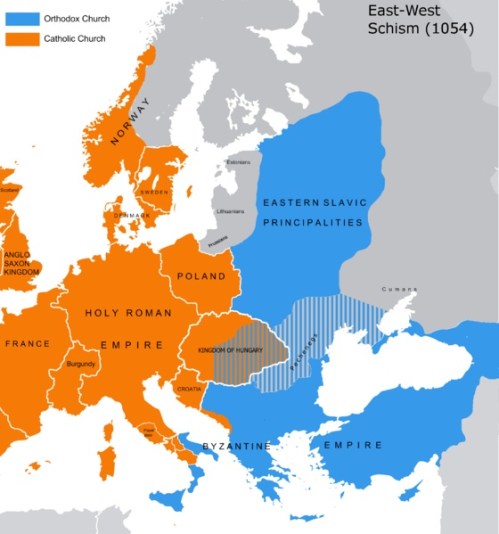
For example, Rome got all huffy with the Byzantine emperor, which had the Orthodox Church firmly under his thumb. And with politics all mixed up in the East-West divide, what should have been strictly theological, liturgical and administrative church issues got worse and worse until the Orthodox and Roman Churches formally excommunicated each other in 1054, something now known as the Great Schism.
Later on, Rome used its big old jackboots of excommunication, interdiction and inquisition to stomp on the necks of political rulers and their citizenry, supposedly for the good of everyone’s immortal soul, but in reality, not so much.
Excommunication is like shunning. It chucks an individual right out of the community. It is supposed to not so much punish the culprit, as correct him and bring him back to the path of righteousness.
Interdiction suspends certain rights, without the chucking out part. It has different degrees and can be used against a locality or a person who needs correction. The big whammy interdicts the popes misused for political purposes forbade priests from administering the Sacraments to any of the faithful. Since they were all Roman Catholics who believed in the power and necessity of the Sacraments for eternal salvation, you can imagine the grass roots pressure rulers experienced when their people couldn’t get their babies baptized, go to confession, receive Eucharist, get married, or receive Last Rites!
The Inquisition was a division of the judicial system of the Roman Catholic Church. It started in 12th-century France to persecute heresy, but was later expanded to other countries and other offenses. In 1252, Pope Innocent IV approved the use of torture, not one of my Church’s finest hours. Although being turned over to secular authorities for execution was possible in some places, the sentence was not performed by clerics, who were forbidden to kill. Inquisitors generally preferred not to do so, since it constituted a failure of the process, but some of them seemed to have been fairly enthusiastic about using the death penalty. In his fifteen years in office, one inquisitor had 42 executions out of his 900 guilty verdicts.
The freedom, power and authority of the Roman Church wouldn’t have been bad things, if only the popes had used them for strictly spiritual purposes – e.g., to chastize local churches that were straying from the Gospel or to discipline priests who were living in sin. But the popes used them for political purposes, to try and make themselves top dog over every political entity in all the orange parts, which was so not cool:
I think the reference to Jezebel in the letter to Thyatira points up just how much worse the papacy got in the Late Middle Ages. In the Pergamum (Early Middle Ages) letter, Jesus cited Balaam and the Nicolaitans. But really … Balaam was just a spiritual leader who sold out to the local political power while the Nicolaitans were just a small, splinter group of early Christians who condoned sexual immorality. Compared with Jezebel, the Baal-worshiping wife of the whipped King of Israel, they were very small potatoes on the whole political, religious and moral corruption front.
I want to close with one interesting point a convert I know made when he introduced himself to the RCIA class I was helping to instruct. He explained how he had spent the previous ten years “reading himself into the Catholic Church.” He was (and is) a really bright guy and a voracious reader who had set out to find the truth about his Catholic wife’s church. The thing that ultimately impressed him the most and led him to enroll in RCIA was the corruption of the medieval popes!
Extraordinary, wouldn’t you think? Most people point to that period of time as proof positive that the Roman Catholic Church is eeeeeeeeevil. But he had a point that resonates strongly with me to this day. He said,
“Even when the worst popes were in charge, they never used their power to CHANGE DOCTRINE.”
Really. They could have, couldn’t they? Isn’t that what Henry VIII did? Change the rules so he could legally do what he wanted? To me and I expect to many other devout Catholics, the rotten popes stand as a sign that the Holy Spirit was not absent from the Church. He was busy protecting the deposit of faith, even as he was granting to papal sinners the same freedom we all have to behave as badly as we choose.
————
Sources:
Eerdman’s Handbook to the History of Christianity [Eerdmans Publishing, 1977]
The New Bible Dictionary [Eerdmans Publishing, 1962]
To the angel of the church in Thyatira, write this:
The Son of God, whose eyes are like a fiery flame and whose feet are like polished brass, says this:
I know your works, your love, faith, service, and endurance, and that your last works are greater than the first.
Yet I hold this against you, that you tolerate the woman Jezebel, who calls herself a prophetess, who teaches and misleads my servants to play the harlot and to eat food sacrificed to idols.
I have given her time to repent, but she refuses to repent of her harlotry. So I will cast her on a sickbed and plunge those who commit adultery with her into intense suffering unless they repent of her works. I will also put her children to death.
Thus shall all the churches come to know that I am the searcher of hearts and minds and that I will give each of you what your works deserve.
But I say to the rest of you in Thyatira, who do not uphold this teaching and know nothing of the so-called deep secrets of Satan: on you I will place no further burden, except that you must hold fast to what you have until I come.
To the victor, who keeps to my ways until the end, I will give authority over the nations. He will rule them with an iron rod. Like clay vessels will they be smashed, just as I received authority from my Father. And to him I will give the morning star.
Whoever has ears ought to hear what the Spirit says to the churches.
I propose here that the Revelation letter to Thyatira refers to the Late Middle Ages – roughly 1,000 AD – 1,500 AD.
Plenty have identified “the woman Jezebel” with the Roman Catholic Church, but I’m not one of them. God isn’t concerned with institutions, but with individuals, something He makes very clear in every letter with “the victor” and “whoever has ears ought to hear.” These are messages to individuals.
I think a quick note is in order here about the 17th chapter of Revelation, which anti-Catholic rhetoric often cites to equate the whore of Babylon with the Roman Catholic Church.
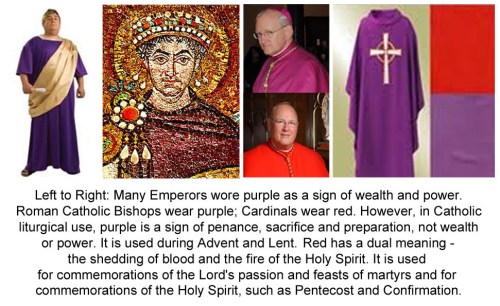
She wears “purple and scarlet.”
Yes, these are the colors worn by Bishops and Cardinals, but these same colors were used for the veil in the Jewish Temple and the clothing of the High Priest officiating there. They were also used for many centuries by political leaders for their official robes – e.g., Alexander the Great, the kings of Ptolemaic Egypt, and the Seleucid, Roman and Byzantine Emperors. Why? Because the dye was difficult to make and therefore expensive.
She is “adorned with gold, precious stones, and pearls.”
On its own, this merely suggests ostentatious wealth, which is hardly unique to the Roman Catholic Church.
She holds “in her hand a gold cup that was filled with the abominable and sordid deeds of her harlotry.”
A gold cup full of sin is far too generic a symbol to point definitively to the allegedly false doctrine of transubstantiation (that the wine in the chalice becomes the real Blood of Christ) … particularly if you happen to believe the doctrine like I do.
She is “drunk on the blood of the holy ones and on the blood of the witnesses to Jesus.”
Yes, there was the shameful period of the Inquisition when torture and death were used by the Roman Church to punish its enemies, but again, that’s hardly a unique qualification. Many regimes, including Roman, Muslim, Protestant, Nazi and Communist, have done likewise.
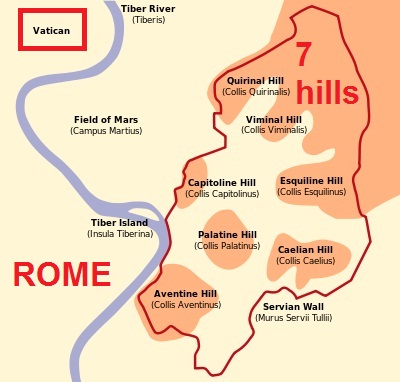
The real kicker for anti-Catholic exegetes is the part about how the woman sits on a beast whose seven heads “represent seven hills upon which the woman sits.”
And while it is true that Rome lays claim to having been built on seven hills and that it is the home of the Catholic Pope, the interpretation breaks down as soon as one consults a map. The Vatican is not on the seven hills. In fact, no Pope has ever lived or had his “seat” (cathedra or cathedral) on any of the seven hills of Rome. The big bad Roman Empire now … that actually was built on the seven hills. But you can’t even make a good case for this interpretation. About 60 other cities world-wide lay claim to being built on seven hills. Astonishingly, these include Jerusalem (Judaism), Constantinople (Eastern Orthodoxy), Moscow (Russian Orthodoxy) and Mecca (Islam)!
To be continued …
————
Sources:
Eerdman’s Handbook to the History of Christianity [Eerdmans Publishing, 1977]
The New Bible Dictionary [Eerdmans Publishing, 1962]
To the angel of the church in Pergamum, write this:
The one with the sharp two-edged sword says this:
I know that you live where Satan’s throne is, and yet you hold fast to my name and have not denied your faith in me, not even in the days of Antipas, my faithful witness, who was martyred among you, where Satan lives. Yet I have a few things against you. You have some people there who hold to the teaching of Balaam, who instructed Balak to put a stumbling block before the Israelites: to eat food sacrificed to idols and to play the harlot. Likewise, you also have some people who hold to the teaching of [the] Nicolaitans. Therefore, repent. Otherwise, I will come to you quickly and wage war against them with the sword of my mouth.
Whoever has ears ought to hear what the Spirit says to the churches. To the victor I shall give some of the hidden manna; I shall also give a white amulet upon which is inscribed a new name, which no one knows except the one who receives it.
Finally, finishing Pergamum as a type for the church during the Early Middle Ages (roughly 313 AD to 1,000 AD) with the white amulet as a sign of Baptism.
From the earliest days of the Church, Christian worship services started with preaching, teaching and prayer open to all, but the second part at which believers shared the Lord’s Supper was restricted to baptized believers only. During the Early Middle Ages, the Church defined the doctrine of Original Sin which in turn made it necessary to define Baptism as necessary for salvation.
I want to talk briefly about “a new name, which no one knows except the one who receives it” because it’s quick, which the white amulet is not. Bible readers will be familiar with what a big deal God makes about names and naming. It starts right at the beginning with God giving Adam the right to name all the creatures. Later on, God gives new names to some as a sign of a change in their status or calling. E.g., Abram-Abraham, Sarai-Sarah, Jacob-Israel. Then, there’s the huge deal with Moses wanting to know God’s name. Apparently, there was a tradition that knowing a person’s true name gave you power over them.
Infants are named at Baptism; adult converts often take a new name at Baptism. Jesus says in the letter to Pergamum that He is going to personally give victors extra heavy duty special names which only He and they will know! I love that!
About the white amulet … most of the Bible translations I checked use the word stone in this spot. A couple use pebble or counter. Only the New American Bible seems to have chosen amulet, but there’s nothing in the footnotes about why. However, the commentaries I found likened the stone/pebble to such a wide range of objects and uses that I’ve ended up thinking amulet was an inspired choice. In English, stone and pebble don’t have many referents; in the original Greek, there were a lot of meanings with broad cultural references about objects imbued with meaning (i.e., amulets).
For example, in New Testament times there was a custom in which jurors cast their votes by means of a stone. A white stone signified acquittal, a black one condemnation. In Acts 26:9-10, Paul talks about his own persecution of the Christians before his conversion:
“I imprisoned many of the holy ones with the authorization I received from the chief priests, and when they were to be put to death I cast my vote against them.”
According to http://whitestoneweb.com/index.php/archives/238, the word used for vote in this passage is the same word used for stone in the letter to Pergamum. In other words, the victors will get Jesus’ vote for acquittal on Judgment Day. Very apropos for our Baptism reference.
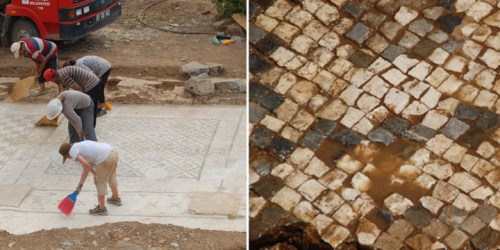
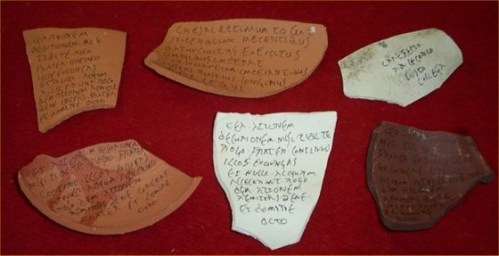
Stone could also mean any of a variety of things, many that were also called tessera. In early antiquity, mosaic artwork was made from naturally-formed colored stones – i.e., pebbles. But by 200 BC, it had become common to cut marble or limestone into small cubes which were called tesserae (probably from the Greek for four, because of the corners).
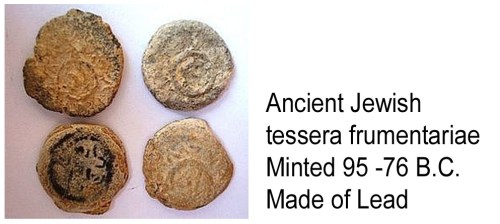
Stone and tessera got used for all kind of small objects made from a variety of materials and in many shapes. These were used in ways we would use paper now. E.g., as tickets to the games or theater. Permission to enter … a very nice reference for Baptism, no? There was also the tessera frumentariae which were issued to the poor like food stamps or welfare checks. Another excellent reference for God’s free gift of salvation and the Baptism that allowed converts to attend the Lord’s Supper!
Tesserae militaris were used by Roman commanders to circulate orders and each night’s new password to the troops. The war and victor references in the passage we’re studying make this one particularly pertinent. I especially like the password “permission to enter” thing.
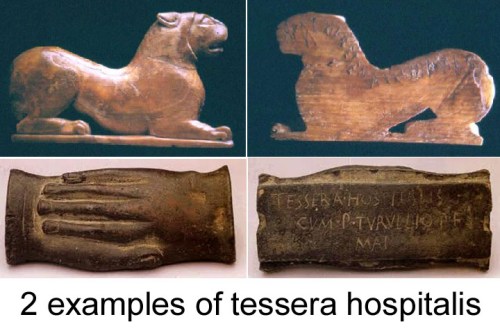
Probably the most powerful of referents for our white amulets were the tesserae hospitalis which were used to seal and signify a compact of mutual friendship and hospitality between two persons. These objects and the bond they represented was one of the oldest and most sacred known among the Romans and was scrupulously observed. How beautiful is the image of Jesus giving each victor a token that guarantees entrance into eternal life!
————
Sources:
Eerdman’s Handbook to the History of Christianity [Eerdmans Publishing, 1977]
The New Bible Dictionary [Eerdmans Publishing, 1962]
To the angel of the church in Pergamum, write this:
The one with the sharp two-edged sword says this:
I know that you live where Satan’s throne is, and yet you hold fast to my name and have not denied your faith in me, not even in the days of Antipas, my faithful witness, who was martyred among you, where Satan lives. Yet I have a few things against you. You have some people there who hold to the teaching of Balaam, who instructed Balak to put a stumbling block before the Israelites: to eat food sacrificed to idols and to play the harlot. Likewise, you also have some people who hold to the teaching of [the] Nicolaitans. Therefore, repent. Otherwise, I will come to you quickly and wage war against them with the sword of my mouth.
Whoever has ears ought to hear what the Spirit says to the churches. To the victor I shall give some of the hidden manna; I shall also give a white amulet upon which is inscribed a new name, which no one knows except the one who receives it.
Continuing with Pergamum as a type for the church during the Early Middle Ages (roughly 313 AD to 1,000 AD).
The final “rewards” segment of the letter is fascinating when seen in the context of early Medieval Christianity:
To the victor I shall give some of the hidden manna;I shall also give a white amulet upon which is inscribed a new name, which no one knows except the one who receives it.
During the second five hundred years of the Christian era, the Church substantially developed the doctrines about both Eucharistand Baptism. I think the references to hidden manna and a white amulet refer to this aspect of Church history.
Hidden Manna as a sign of Eucharist
Manna was the food God miraculously sent to the Israelites during their forty years sojourn in the desert (Exodus 16; Numbers 11:6-9). As a reminder to future generations, a vessel filled with manna was placed near the Ark of the Covenant. While it was a miraculous and nourishing gift from God, it was not at all hidden in any way.
Right from the start, manna was a common Eucharistic symbol. In chapter six in the Gospel of John, Jesus makes a direct connection between manna, Himself and eternal life. Then, at the Last Supper,
Jesus took bread, said the blessing, broke it, and giving it to his disciples said, “Take and eat; this is my body.” [Matt 26:26]
From the earliest days, Christian worship services started with preaching, teaching and prayer, then culminated in the formal acts taken over from the Last Supper. This latter was known variously as the breaking of bread, communion, or eucharist (Greek for thanksgiving). Again, nothing hidden.
At the beginning of the Early Middle Ages, it was held that an actual change took place in the bread and wine; the fourth century Bishop of Milan, St. Ambrose, wrote that the Eucharist contains the true, historical body of Jesus Christ.
Toward the end of the Early Middle Ages, St. Paschasius wrote De Corpore et Sanguine Domini in which he explained why he agreed with St. Ambrose.
Although there were some theologians who held that the “body and blood of Jesus” in the Eucharist were merely metaphorical, not real, it was the Real Presence of Christ in the Eucharist (known in Latin as transubstantiation and in Greek as metousiosis) that became the dominant and eventually defined doctrine for both East and West.
The Catholic Catechism explains:
Because Christ our Redeemer said that it was truly his body that he was offering under the species of bread, it has always been the conviction of the Church of God, … that by the consecration of the bread and wine there takes place a change of the whole substance of the bread into the substance of the body of Christ our Lord and of the whole substance of the wine into the substance of his blood. This change the holy Catholic Church has fittingly and properly called transubstantiation. [Italics added by CtH.]
Clearly, the reality of the Real Presence was a hot issue during the Early Middle Ages, because around 700 AD, God sent us one of my all-time favorite miracles to reassure the Church that the Real Presence was really REAL.
The Eucharistic Miracle of Lanciano [4:18]
In the Eucharist, the species (appearance, taste, smell, as opposed to the substance) of the bread and wine (usually) stay the same, which I’ve always thought was a genuine act of hospitality and courtesy on God’s part cuz otherwise … ew.
Here then, we find the hidden part of hidden manna that victors will receive!
I am the bread of life. Your ancestors ate the manna in the desert, but they died. … I am the living bread that came down from heaven; whoever eats this bread will live forever; and the bread that I will give is my flesh for the life of the world. [John 6:48-51]
Oy … I was planning to finish Pergamum in one blog, but again I find there’s so much fun stuff for both Eucharist and Baptism that it seems better to split them into two blogs. But I PROMISE … one more and I’ll be done with Pergamum LOL!
Sources:
Eerdman’s Handbook to the History of Christianity [Eerdmans Publishing, 1977]
The New Bible Dictionary [Eerdmans Publishing, 1962]











 polination.blog