There’s a bunch of evidence to put the day of Jesus’ crucifixion on April 3, 33 AD, or Nisan 14, 3794 in the Jewish calendar. For example, a Greek historian named Phlegon described the same events we read about in the Gospels — i.e., that the sun was eclipsed and there were earthquakes — and he dates it to 33 AD. Pontius Pilate wrote something even more specific in a report to Tiberius Caesar:
Now when he was crucified darkness came over all the world, the sun was altogether hidden, and the sky appeared dark while it was yet day, so that the stars were seen, though still they had their luster obscured, wherefore, I suppose your excellency is not unaware that in all the world they lighted their lamps from the sixth hour until evening. And the moon, which was like blood, did not shine all night long, although it was at the full. – Pontius Pilate, 33 AD
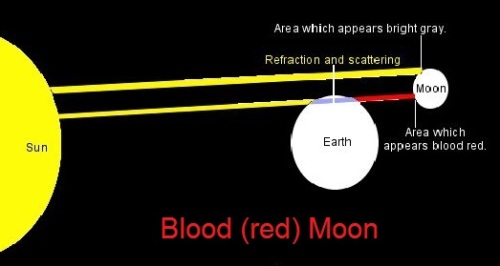
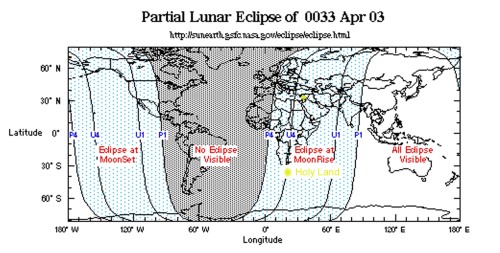
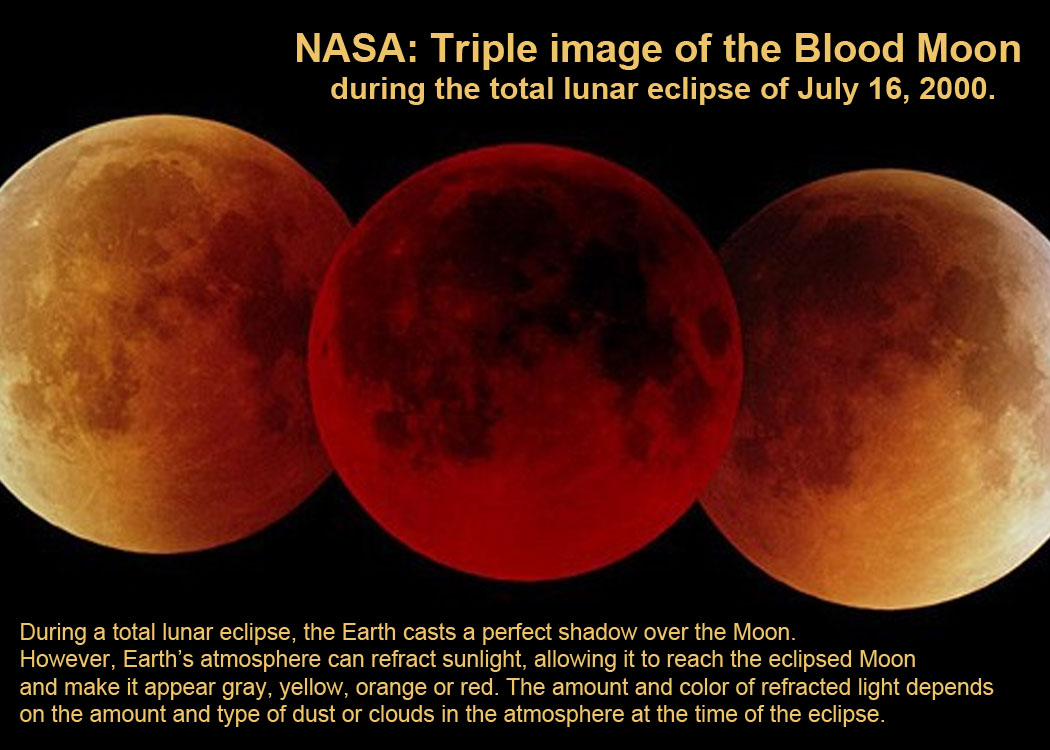
I don’t know what caused the sky to darken in the afternoon. A regular solar eclipse only lasts minutes, not hours, and is caused by the moon, which was in the wrong place. However, a blood moon is common during a lunar eclipse, which according to NASA occurred on April 3, 33 AD and was visible in the Holy Lands.
The only problem with accepting the 33 AD date is that the Synoptic Gospels all refer to the Last Supper as the “Passover feast.” We know that the Last Supper was on a Thursday, but in 33 AD, Nisan 14 was on Friday, not Thursday. When God set out the Jewish feasts, He told Moses:
The Passover of the LORD falls on the fourteenth day of the first month, at the evening twilight. -Lev 23:2
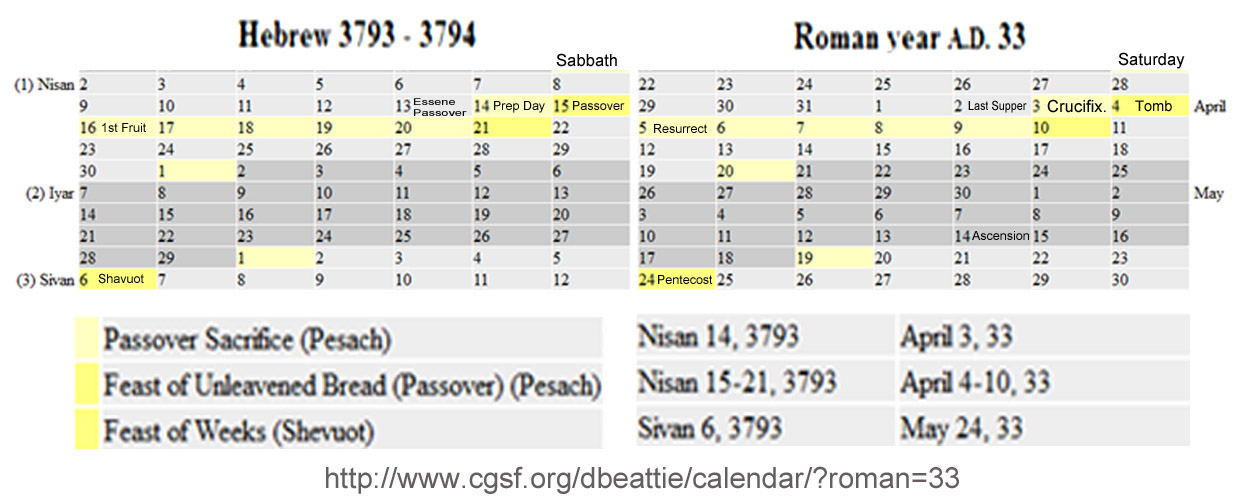
I looked up every year from 3788 through 3800; Nisan 14 just didn’t fall on a Thursday in any year within a reasonable span of the time we know Jesus died. Nisan 14 landed on 3788/Wednesday, 3789/Monday, 3790/Saturday, 3791/Wednesday, 3792/Wednesday, 3793/Monday, 3794/Friday, 3795/Wednesday, 3796/Monday, 3797/Friday, 3798/Wednesday, 3799/Monday, 3800/Monday. (The Hebrew/Roman calendar app URL is below.)
The Gospel of John presents another conundrum, in that it clearly says the Last Supper was on Nisan 13, the day before Passover, and that Jesus died on the cross even as the priests in the Temple were killing the lambs people needed for their Passover meals that evening. Nisan 14 is called Preparation Day, for obvious reasons.
In other words, John’s Gospel agrees with Phlegon, Pilate and NASA that Jesus was crucified on April 3, 33 AD. I love how that date works out in our calendar with our Bible number symbolism. The THIRD day of the FOURTH month is God plus Creation = Completeness. And two THREES for the year is like God the Father and God the Son together.
That just leaves us with the puzzling question of why the Synoptics ALL say the Last Supper on Nisan 13 was a Passover feast. Pope Benedict XVI explained it in his Holy Thursday homily in 2007. It seems that the Dead Sea Scrolls say that the Essene community celebrated a lamb-less Passover on the evening of the 13th. Neat, huh? Jesus was the Lamb at this meal during which He instituted the Holy Eucharist, giving us His Body and His Blood for all time.
The Essenes were an ascetic Jewish sect that practiced voluntary poverty. We would call them monks and, according to Josephus, a noted historian of the period, there were thousands of them throughout Roman Judea. Apparently, they expected the Messiah to arrive soon, so maybe it should not be surprising that they disappeared simultaneously with the rise of Christianity. It is speculated that most of them became Christians.
I think this fact explains the apparent contradiction between the Synoptic Gospels, which were written around 50 AD, and the Gospel of John, which was written a few decades later. People would’ve still been familiar with the Essene practices in 50 AD; some of them would’ve been former Essenes themselves. But by 80 AD, those references to a Passover feast on Nisan 13 would’ve had hands shooting up at every Bible study, especially among the Gentiles who would’ve been really clueless about the practices of an extinct Jewish sect. I think John knew there was a lot of confusion, so he wrote what he did in his Gospel to make it very, very clear that Jesus died on Preparation Day, Friday, Nisan 14.
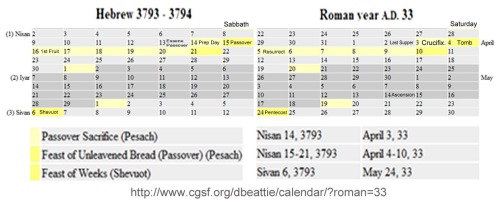
The Passover feast starts off the week-long Feast of Unleavened Bread, which runs from Nisan 14 (sunset) until Nisan 21 (sunset). The 15th and 21st are holy rest days; that’s why they’re dark yellow on the calendar above. When Nisan 15 fell on Saturday, as it did in 33 AD, it was a High Sabbath.
Jesus was entombed throughout the High Sabbath of Nisan 15, 3794 (April 4, 33 AD).
In Leviticus 23, when God set the feast calendar for His people, He nested two special feasts within the week of Unleavened Bread – the Feast of Passover and the Feast of First Fruits. As I’ve explained, Passover always starts at sunset on Nisan 14, which means it floats around in the week from year to year. The Feast of First Fruits, however, is always on the day after the Sabbath (i.e., Sunday) that falls within the week of Unleavened Bread.
“You shall bring the first sheaf of your harvest to the priest, who shall elevate the sheaf before the LORD that it may be acceptable on your behalf. On the day after the Sabbath the priest shall do this.” Lev 23:10-11
In 33 AD, the first Easter Sunday, the day Jesus rose from the dead, was also the Feast of First Fruits.
“First fruits” was the portion of the harvest offered in thanksgiving to God. It implies the consecration of the entire harvest to come. Christ’s resurrection is not an end in itself; its finality lies in the whole harvest, ourselves. In 1 Cor 15, Paul goes into this idea, but I never knew before that the first Easter was literally the Jewish Feast of First Fruits!
But now Christ has been raised from the dead, the first fruits of those who have fallen asleep. For since death came through a human being, the resurrection of the dead came also through a human being. For just as in Adam all die, so too in Christ shall all be brought to life, but each one in proper order: Christ the first fruits; then, at his coming, those who belong to Christ.
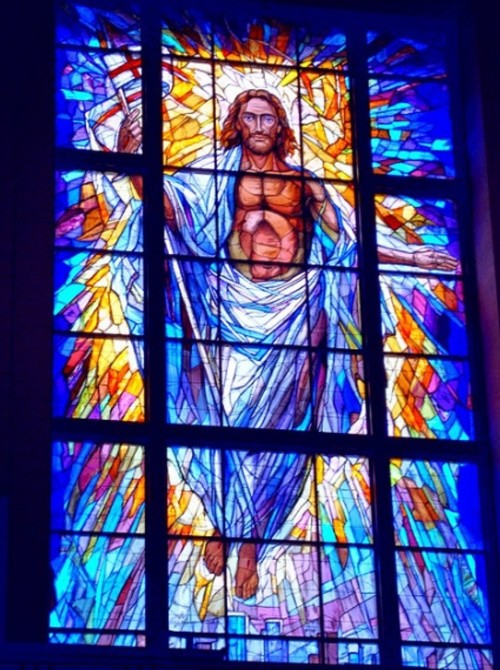
Forty days after Easter, Jesus ascended into Heaven:
Jesus presented himself alive to them by many proofs after he had suffered, appearing to them during forty days and speaking about the kingdom of God. While meeting with them, he enjoined them not to depart from Jerusalem, but to wait for “the promise of the Father about which you have heard me speak; for John baptized with water, but in a few days you will be baptized with the holy Spirit. … You will receive power when the Holy Spirit comes upon you, and you will be my witnesses in Jerusalem, throughout Judea and Samaria, and to the ends of the earth.” When he had said this, as they were looking on, he was lifted up, and a cloud took him from their sight. Acts 1:3ff
Ten days after that:
When the time for Pentecost was fulfilled, they were all in one place together. And suddenly there came from the sky a noise like a strong driving wind, and it filled the entire house in which they were. Then there appeared to them tongues as of fire, which parted and came to rest on each one of them. And they were all filled with the holy Spirit and began to speak in different tongues, as the Spirit enabled them to proclaim. Acts 2:1ff
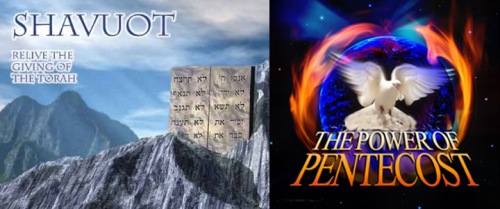
In the Jewish tradition, Pentecost is called the Feast of Weeks or Shavuot. It commemorates the day God gave the Torah to the entire nation of Israel assembled at Mount Sinai. Jesus said, “I have come not to abolish the Law, but to fulfill it.” And the Holy Spirit came on Shavuot. Now there’s something to meditate on!
Sources:



















 polination.blog