

Earlier this month, an FDA lawyer was forced to admit, under oath, that doctors have a right to prescribe ivermectin for anything they want, because (unlike the ‘rona jabs) the drug was fully approved for use in humans. And it’s been in use, worldwide, since 1986.

The FDA’s admission revived the discussion about using ivermectin for COVID-19. On August 11, Sen. Ron Johnson (R-Wis.) said, “The doctors I’ve been dealing with and talking to for years now, they believe that probably hundreds of thousands of Americans lost their lives because they were denied early treatment and they were denied because the FDA sabotaged, for example, ivermectin. We are going down a very dangerous path, but it’s a path that is being laid out and planned by an elite group of people that want to take total control over our lives, and that’s what they’re doing bit by bit.”
- https://www.theepochtimes.com/mkt_app/us/fda-says-ivermectin-remains-unapproved-for-covid-19-treatment-5476396
- https://www.ronjohnson.senate.gov/2022/12/sen-ron-johnson-hears-from-experts-and-medical-professionals-on-covid-19-vaccine-efficacy-and-safety
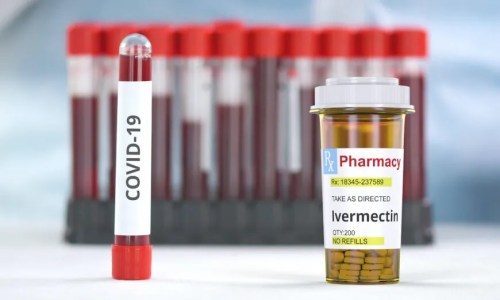
Not surprisingly, on August 17, the FDA reiterated its sniffy disapproval of anyone using ivermectin to prevent or treat COVID-19. The Legacy Media promptly repeated their spin that it is not approved, because they haven’t done enough studies to establish its efficacy and safety … so not at all like the experimental COVID-19 vaxxxines that were rushed into worldwide use based on the carefully hidden results of rushed clinical trials.

Officially, the FDA has approved ivermectin only to treat a few specific parasitic infections, including strongyloidiasis and onchocerciasis. It proved so inexpensive, safe and effective that doctors around the world have prescribed it for a much wider range of parasitic infections than the ones officially approved. And, as its safety became clear, researchers looked into how it works and what else it might be useful in treating. Below I discuss this wide range of non-parasitic ailments. Obviously, these uses are just as off-label as COVID-19, yet the FDA doesn’t demonize any of them. In fact, as you can see in the screenshot above, the CDC recommends its off-label use for scabies.
- https://www.webmd.com/drug-medication/what-is-ivermectin
- https://www.cdc.gov/parasites/scabies/health_professionals/meds.html

In February 2017, an article entitled “Ivermectin: enigmatic multifaceted ‘wonder’ drug continues to surprise and exceed expectations” appeared in the Journal of Antibiotics that stated it is “offering more and more promise to help improve global public health by treating a diverse range of diseases, with its unexpected potential as an antibacterial, antiviral and anti-cancer agent being particularly extraordinary. … For most of this century, some 250 million people have been taking it annually … [some] for over 30 years. … re-purposing it to control a completely new range of diseases … is generating interest and excitement in the scientific and global health research communities. … Several problematic reactions have been recorded, but they are generally mild and usually do not necessitate discontinuation of the drug. … There is a continuously accumulating body of evidence that ivermectin …. has been shown to exhibit both anti-cancer and anti-cancer stem cell properties.” This article is quite long and includes numerous links to various studies involving ivermectin. Below, I will look at some of these in more detail.
In June 2011, a paper entitled “Anti-inflammatory effects of ivermectin in mouse model of allergic asthma” demonstrated that ivermectin may be “an effective suppressor of inflammation and may be efficacious in the treatment of non-infectious airway inflammatory diseases such as allergic asthma.”

In April 2012, a paper entitled “Ivermectin is a potent inhibitor of flavivirus replication specifically targeting NS3 helicase activity: new prospects for an old drug” reported that ivermectin is “a highly potent inhibitor” of Yellow Fever Virus (YFV). “Moreover, ivermectin inhibited, although less efficiently, the replication of several other flaviviruses, i.e. dengue fever, Japanese encephalitis and tick-borne encephalitis viruses. Ivermectin exerts its effect at a timepoint that coincides with the onset of intracellular viral RNA synthesis.” < I’m no scientist, but that last bit sure sounds like it could kick the ’rona’s viral butt, yeah?
In June 2012, a paper entitled “Ivermectin binding sites in human and invertebrate Cys-loop receptors” reported that ivermectin shows great potential for treating a wide variety of human neurological disorders such as ALS.

In October 2012, a paper entitled “Ivermectin inhibits growth of Chlamydia trachomatis in epithelial cells” demonstrated that ivermectin showed promise for the treatment of sexually-transmitted or ocular infections by Chlamydia.

In July 2016, a paper entitled “The efficacy, safety, and tolerability of ivermectin compared with current topical treatments for the inflammatory lesions of rosacea: a network meta-analysis” reported that a 1% ivermectin cream was the most effective topical treatment for rosacea currently available, “with at least an equivalent safety and tolerability profile.”

In March of 2016, the Journal of Drugs in Dermatology (JDD) published a study entitled “Over 25 Years of Clinical Experience With Ivermectin: An Overview of Safety for an Increasing Number of Indications.” The abstract includes, “For over 25 years, ivermectin has been used to treat parasitic infections in mammals, with a good safety profile. … Numerous studies report low rates of adverse events. … Ivermectin has been used off-label to treat … high margin of safety for a growing number of indications based on its anti-parasitic and anti-inflammatory activities.” [Edited only for clarity]

The current page about ivermectin @ Drugs.com says, “The antiviral activity of Ivermectin has been shown against a wide range of RNA and DNA viruses, for example, dengue, Zika, yellow fever, and others.” Wait, wut? Viruses? Like maybe COVID?
Also, “There is currently insufficient evidence from the COVID-19 Treatment Guidelines Panel to recommend either for or against the use of ivermectin in Covid-19 patients for the treatment of severe or mild COVID-19 symptoms.” IOW, it’s safe, it’s cheap, and a whole lot of doctors say it has helped their patients … but don’t you dare use that horse medicine! Riiiiight.

So, about that horse medicine thing. Yes, ivermectin is commonly used by veterinarians to treat parasite infections in mammals. The big problem I see with the FDA and whoever else is behind demonizing ivermectin for the ‘rona is that ivermectin is available by prescription only for humans. And while it is widely used for other off-label purposes, some states banned pharmacies from dispensing it for COVID and a few hospitals fired doctors for prescribing it. I remember at least one hospital that chose to ignore a court order rather than allow a dying patient to try it.
- https://www.nbcnews.com/news/us-news/stop-it-fda-warns-people-not-take-veterinary-drugs-treat-n1277371
- https://www.rappler.com/nation/doh-says-illegal-distribution-promotion-ivermectin-violate-fda-act/
- https://pjmedia.com/news-and-politics/benbartee/2023/08/19/lawsuit-against-pharmacies-that-refused-to-fill-ivermectin-prescriptions-tossed-out-n1720590
- https://www.ama-assn.org/delivering-care/public-health/what-fda-wants-doctors-tell-patients-asking-ivermectin
Meanwhile, the slime media hypes the dangers of the ‘rona way beyond what is real. Some polls showed people believing that anywhere from 5% to 50% of people who catch the virus die from it. The real number is somewhere between 0.15% and 2.1%, but it varies hugely depending on which variant you’re looking at (the original Wuhan was the worst, but it’s extinct now), the age of the patients (the virus is far more lethal to senior citizens) and what comorbidities they have (all of the minors who have died of COVID had serious comorbidities).

Anyway, my point is that the constant fearmongering by the media left some people so frightened that they went to their farm stores and bought OTC ivermectin meant for large animals. Some of them got sick, because the doses are way too high for humans. E.g., depending on the sex and breed, cows can weigh anywhere from 800 lbs. to 3,500 lbs. I’m really sorry that happened, but really … whose fault is it that they were deprived of the right to try and scared out of their wits?!
- https://www.nbcnews.com/news/us-news/stop-it-fda-warns-people-not-take-veterinary-drugs-treat-n1277371
- https://faunafacts.com/cows/average-cow-weight/

And, let us not forget that it is common for doctors to prescribe drugs “off-label” – i.e., for purposes that the FDA has not specifically approved. You know those hormones and puberty blockers the Lefties are so fond of? They are not approved for treating gender dysphoria in minors. Meanwhile, studies have shown ivermectin to be effective for COVID.

In June 2020, a study entitled “The FDA-approved drug ivermectin inhibits the replication of SARS-CoV-2 in vitro” reported that ivermectin, which has been “shown to have broad-spectrum anti-viral activity in vitro, is an inhibitor of the causative virus (SARS-CoV-2) … [and] therefore warrants further investigation for possible benefits in humans.”

In December 2020, a study entitled “A five-day course of ivermectin for the treatment of COVID-19 may reduce the duration of illness” reported that “a randomized, double-blind, placebo-controlled trial” involving 72 hospitalized patients in Bangladesh found that 12 mg of ivermectin taken once daily for 5 days reduced the course of the disease from 9.7 days as compared with 12.7 days for the placebo group. “There were no severe adverse drug events recorded in the study. A 5-day course of ivermectin was found to be safe and effective in treating adult patients with mild COVID-19. Larger trials will be needed to confirm these preliminary findings.”

In January 2021, a study entitled “Use of Ivermectin Is Associated With Lower Mortality in Hospitalized Patients With Coronavirus Disease 2019: The Ivermectin in COVID Nineteen Study” looked at 280 ‘rona patients, 173 who were treated with ivermectin and 107 who were not. Most patients in both groups also received hydroxychloroquine, azithromycin, or both. Mortality was significantly lower in the ivermectin group, especially in patients with severe pulmonary involvement.



 polination.blog