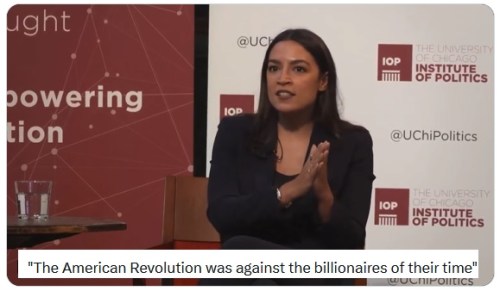
In May of 2026, Rep. Alexandria Ocasio-Cortez said, “The American Revolution was against the billionaires of their time. And we were declaring independence from such an extreme marriage of wealth and power in the state.”
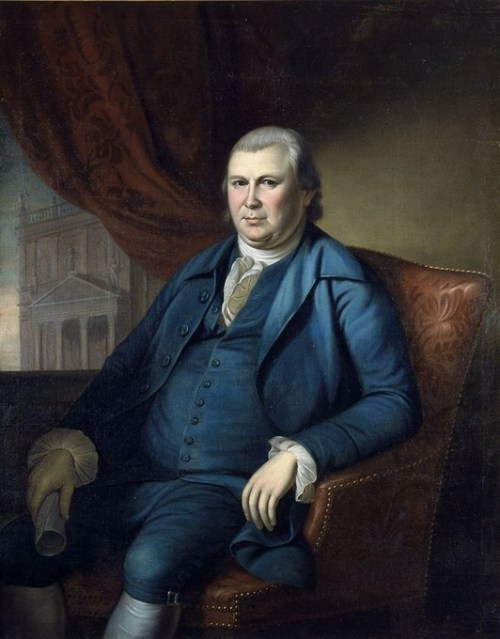
Robert Morris would like a word. Morris, by most accounts, the wealthiest man in the country in 1775, was a Philadelphia shipping merchant who had built a fortune from nothing. He had come over from Liverpool, England, at thirteen and apprenticed his way into a trading partnership that eventually became what one biographer calls “the first national conglomerate.”
He signed the Declaration of Independence, the Articles of Confederation, and the Constitution, making him one of only two men to sign all three founding documents. The other was George Washington, who held the title of wealthiest American president in history for over two centuries, with an estimated net worth of almost $600 million in today’s dollars.
When the Continental Congress needed someone to manage the country’s finances during the war, they turned to Robert Morris because he was the only person with the business network and personal credit to pull it off. What followed was remarkable.
When Washington needed gunpowder, Morris smuggled it past British blockades. When the Continental Navy needed ships, Morris supplied three of his own. When Congress couldn’t pay its soldiers (which happened with alarming regularity) Morris issued what became known as “Morris notes”—personal IOUs backed by his own immense wealth that circulated as currency throughout the army for years. When Washington needed to move his forces south for the Yorktown campaign that effectively ended the war, it was Morris who came up with the money to make it happen.
For three years, Robert Morris personally financed the American Revolution out of his own pocket. His personal contribution to the war effort has been estimated at roughly $79 million of the total $101 million spent—numbers that are difficult to translate into modern equivalents but represent something close to everything he had.
Robert Morris died in modest circumstances in 1806, largely forgotten. The man who had funded the birth of a nation outlived his fortune by nearly a decade, but no evidence exists that he ever regretted his contribution.
And Morris and Washington weren’t anomalies. John Hancock, who presided over the Continental Congress and signed the Declaration in letters large enough to ensure King George could read it “without his spectacles,” was a wealthy Boston merchant whose fortune made him one of the most prominent men in the colonies. Charles Carroll, also a signer of the Declaration, was by some accounts the wealthiest man in America at the time of his death.
These were not desperate men with nothing to lose! They were men with enormous fortunes who looked at what the British Crown was doing and decided that natural rights, self-governance, and the principles of limited government were worth more than their own financial security or their lives—and then proved it!
The Revolution was about taxation without representation. It was about the right of a free people to govern themselves. It was about whether legitimate authority derives from the consent of the governed, or from whoever has the most soldiers. Those ideas came directly from John Locke, were refined by Jefferson and Paine and Madison, and were debated in pamphlets and town meetings for a generation before a single shot was fired at Lexington.
Wealth redistribution wasn’t a grievance in the Declaration of Independence. Punishing the successful wasn’t a principle of the Constitutional Convention.
The historical record on this is not ambiguous.