“Wow, it’s cold out there,” my husband said, shutting the back door behind him, blowing on his red hands and shaking snow from his boots. It was another bitterly cold Sunday night here in the Adirondacks in upstate New York.
“How’s the fuel in the tank?” I asked, my stomach knotting. He’d gone out to check on the level for our furnace. And I knew we hadn’t replenished it for a while.
“I put the dipstick in and measured. We’ve got just four inches of fuel left,” my husband said.
“Four inches!” I exclaimed. “That will never last a whole week.” And it would be at least that long before we could afford to order more fuel. Like so many other families, we were struggling to make ends meet. It sure didn’t help that the weather forecast called for frigid temperatures and snow, snow and more snow.
I lay in bed that night, worrying and praying. God, I hope you still do miracles, I thought, because that’s what it’s going to take to keep our family warm. Suddenly I remembered the passage from Matthew of Jesus providing for the masses with just seven loaves of bread and a few fish. If you can do that, Lord, I prayed, surely you can keep us warm, right?
The week wore on. The weather raged. I kept praying and clinging to the image of the loaves and fishes. Somehow, the furnace chugged on.
The following Sunday, with still three days left before I could order more fuel, I trudged through waist-deep snow out to the oil tank. I just had to know how soon our furnace might shut off.
The tank made a very empty gong sound as I lifted the cap. Oh, please, let there be some fuel in there, I thought. I put the dipstick in and pulled it out. I looked at the stick, then blinked my eyes and looked again.
I ran into the house, carrying the dipstick. “Honey!” I called to my husband.
“Oh, no, don’t tell me. We’re empty,” he said.
“Not quite,” I said. I showed him the dipstick.
Exactly four inches of fuel. Not one drop had been used.
Lyrics: He trusted in God that He would deliver Him; let Him deliver Him, if He Delight in Him. (Psalm 22:8)
Lloyd’s Life Lessons: In Battle, Listen & Trust God To Be Your General
By Lloyd Marcus, Proud Unhyphenated American
An incident confirmed three truths.
One – God will fight my battles.
Two – No weapon formed against me shall prosper.
Three – Trust God!
I am a singer, songwriter and entertainer who tours nationally. Every tour with one particular company, I always performed early in the show until something unexpected happened.
A world renowned celebrity was scheduled to make a special guest appearance which equaled extensive media coverage. I thought it wise to check the format of the show because I knew one act was stealthily conspiring to promote themselves by under-minding the other acts. I learned years earlier that true promotion comes from God – not via dirty tricks.
My suspicion was correct. The conniving act was moved up to my spot. Though angry and a bit hurt, experience has taught me to stabilize my emotions before reacting.
I calmly asked the stage manager to explain why my performance was moved down in the show. Obviously uncomfortable, he referred me to his boss. His boss gave me a rambling senseless answer. The bottom line was the conniving act had successfully stolen my spot.
As I stood in front of management ready to argue for my well-earned position in the show, a still small voice in my brain instructed me, “Say OK, turn, and walk away.”
My wife Mary, upset about this latest attack of my Nemesis anxiously awaited to know the result of my meeting with management. I told her, “I don’t know what this is about, but I have decided to trust God”.
The renowned celebrity excited and captivated the audience. Afterward, the TV cameras and media along with the audience’s attention continued to follow the celebrity off stage.
The emcee introduced the conniving act, but nobody cared. Their performance was overshadowed by the lingering presence of the renowned celebrity; media seeking interviews and audience seeking autographs.
When the celebrity retired to back stage, the emcee gave me an unexpected enthusiastic and glowing introduction. I was received with thunderous applause. All the TV cameras, media and the audience’s attention were refocused back to the stage. Wow! I could not have planned it better. My performance was a huge hit. The audience applauded seeking an encore.
Whatever God has planned for you can not be taken away by man. God had my back.
“Don’t be discouraged by this mighty army, for the battle is not yours, but God’s.” 2 Chronicles 20:15
Comments Off on In Battle, Listen and Trust God to be Your General
In Scripture, numbers are used not only for counting stuff, but also as symbols for or indicators of various Big Ideas.
Many of these numbers are combinations of the two most important numbers, ONE and THREE.
ONE stands for God and all things divine.
I, then, a prisoner for the Lord, urge you to live in a manner worthy of the call you have received, with all humility and gentleness, with patience, bearing with one another through love, striving to preserve the unity of the spirit through the bond of peace: one body and one Spirit, as you were also called to the one hope of your call; one Lord, one faith, one baptism; one God and Father of all, who is over all and through all and in all. [Eph 4:1-6]
THREE stands for God’s actions. E.g., Three visitors came to tell Abraham and Sarah they would have a son [Gen 18], God came down on to Mount Sinai on the third day [Exod 19], and, of course, Jesus rose from death on the third day.
For I handed on to you as of first importance what I also received: that Christ died for our sins in accordance with the scriptures; that he was buried; that he was raised on the third day in accordance with the scriptures. [I Cor 15:3]
FOUR, being ONE (God) + THREE (God’s actions), stands for God’s creative works, both as He created them and as sin distorts them. E.g., in the fourth chapter of Genesis, the first human births are recorded, shortly after which the first human murder is also recorded.
Four appears very frequently in Scripture. It is the number of the great elements (earth, air, fire, and water), directions of compass and wind (north, south, east, and west), divisions of the day (morning, noon, evening, midnight), seasons of the year (spring, summer, autumn, winter), and the phases of the moon (new, waxing, full, waning).
SEVEN, being THREE (God’s actions) plus FOUR (God’s creative works), stands for natural and divine completeness. The Bible is so chock full of sevens, it would be silly to try to quote them here. Click on the link after this quote to see a sampling.
“In the Hebrew, 7 is shevah. It is from the root savah, to be full or satisfied, have enough of. Hence the meaning of the word “seven” is dominated by this root, for on the seventh day God rested from the work of Creation. It was full and complete, and good and perfect. Nothing could be added to it or taken from it without marring it. Hence the word Shavath, to cease, desist, rest, and Shabbath, Sabbath, or day of rest.”
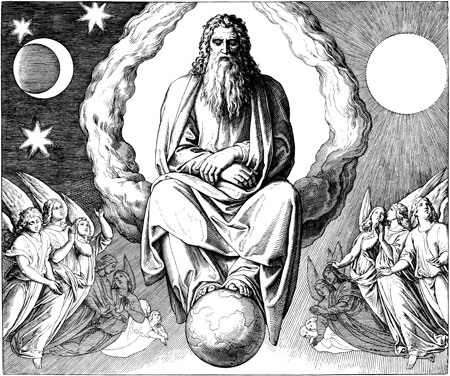
325 The Apostles’ Creed professes that God is “creator of heaven and earth”. The Nicene Creed makes it explicit that this profession includes “all that is, seen and unseen”.
326 The Scriptural expression “heaven and earth” means all that exists, creation in its entirety. It also indicates the bond, deep within creation, that both unites heaven and earth and distinguishes the one from the other: “the earth” is the world of men, while “heaven” or “the heavens” can designate both the firmament and God’s own “place” — “our Father in heaven” and consequently the “heaven” too which is eschatological glory. Finally, “heaven” refers to the saints and the “place” of the spiritual creatures, the angels, who surround God.
327 The profession of faith of the Fourth Lateran Council (1215) affirms that God “from the beginning of time made at once (simul) out of nothing both orders of creatures, the spiritual and the corporeal, that is, the angelic and the earthly, and then (deinde) the human creature, who as it were shares in both orders, being composed of spirit and body.”
The existence of angels — a truth of faith
328 The existence of the spiritual, non-corporeal beings that Sacred Scripture usually calls “angels” is a truth of faith. The witness of Scripture is as clear as the unanimity of Tradition.
329 St. Augustine says: “‘Angel’ is the name of their office, not of their nature. If you seek the name of their nature, it is ‘spirit’; if you seek the name of their office, it is ‘angel’: from what they are, ‘spirit’, from what they do, ‘angel.'” With their whole beings the angels are servants and messengers of God. Because they “always behold the face of my Father who is in heaven” they are the “mighty ones who do his word, hearkening to the voice of his word”.
330 As purely spiritual creatures angels have intelligence and will: they are personal and immortal creatures, surpassing in perfection all visible creatures, as the splendor of their glory bears witness.
Source: Catholic Catechism
Comments Off on God created the heavens and the earth
309 If God the Father almighty, the Creator of the ordered and good world, cares for all his creatures, why does evil exist? To this question, as pressing as it is unavoidable and as painful as it is mysterious, no quick answer will suffice. Only Christian faith as a whole constitutes the answer to this question: the goodness of creation, the drama of sin and the patient love of God who comes to meet man by his covenants, the redemptive Incarnation of his Son, his gift of the Spirit, his gathering of the Church, the power of the sacraments and his call to a blessed life to which free creatures are invited to consent in advance, but from which, by a terrible mystery, they can also turn away in advance. There is not a single aspect of the Christian message that is not in part an answer to the question of evil.
310 But why did God not create a world so perfect that no evil could exist in it? With infinite power God could always create something better. But with infinite wisdom and goodness God freely willed to create a world “in a state of journeying” towards its ultimate perfection. In God’s plan this process of becoming involves the appearance of certain beings and the disappearance of others, the existence of the more perfect alongside the less perfect, both constructive and destructive forces of nature. With physical good there exists also physical evil as long as creation has not reached perfection.
311 Angels and men, as intelligent and free creatures, have to journey toward their ultimate destinies by their free choice and preferential love. They can therefore go astray. Indeed, they have sinned. Thus has moral evil, incommensurably more harmful than physical evil, entered the world. God is in no way, directly or indirectly, the cause of moral evil. He permits it, however, because he respects the freedom of his creatures and, mysteriously, knows how to derive good from it:
For almighty God…, because he is supremely good, would never allow any evil whatsoever to exist in his works if he were not so all-powerful and good as to cause good to emerge from evil itself.
312 In time we can discover that God in his almighty providence can bring a good from the consequences of an evil, even a moral evil, caused by his creatures:
“It was not you”, said Joseph to his brothers, “who sent me here, but God… You meant evil against me; but God meant it for good, to bring it about that many people should be kept alive.”
From the greatest moral evil ever committed — the rejection and murder of God’s only Son, caused by the sins of all men — God, by his grace that “abounded all the more”, brought the greatest of goods: the glorification of Christ and our redemption. But for all that, evil never becomes a good.
313 “We know that in everything God works for good for those who love him.”Romans 8:28 The constant witness of the saints confirms this truth:
St. Catherine of Siena said to “those who are scandalized and rebel against what happens to them”: “Everything comes from love, all is ordained for the salvation of man, God does nothing without this goal in mind.”
St. Thomas More, shortly before his martyrdom, consoled his daughter: “Nothing can come but that that God wills. And I make me very sure that whatsoever that be, seem it never so bad in sight, it shall indeed be the best.“
Dame Julian of Norwich: “Here I was taught by the grace of God that I should steadfastly keep me in the faith… and that at the same time I should take my stand on and earnestly believe in what our Lord shewed in this time — that ‘all manner [of] thing shall be well.'”
Greg Laurie and Randy Alcorn discuss Romans 8:28 [2:29]
314 We firmly believe that God is master of the world and of its history. But the ways of his providence are often unknown to us. Only at the end, when our partial knowledge ceases, when we see God “face to face”, will we fully know the ways by which — even through the dramas of evil and sin — God has guided his creation to that definitive sabbath rest for which he created heaven and earth.
Source: The Catholic Catechism [bolding, italics and color added by CtH to ease reading and aid comprehension]
Heard something like this in a song today and boy did I need this reminder!… Don’t tell your God about your BIG BIG problems, tell your problems about your BIG BIG GOD! :o)
Hebrews 13:5 (NIV)
Keep your lives free from the love of money and be content with what you have, because God has said, “Never will I leave you; never will I forsake you.”
1 Corinthians 12:12-31 (NIV) Unity and Diversity in the Body
12 Just as a body, though one, has many parts, but all its many parts form one body, so it is with Christ. 13 For we were all baptized by one Spirit so as to form one body—whether Jews or Gentiles, slave or free—and we were all given the one Spirit to drink. 14 Even so the body is not made up of one part but of many.
15 Now if the foot should say, “Because I am not a hand, I do not belong to the body,” it would not for that reason stop being part of the body. 16 And if the ear should say, “Because I am not an eye, I do not belong to the body,” it would not for that reason stop being part of the body. 17 If the whole body were an eye, where would the sense of hearing be? If the whole body were an ear, where would the sense of smell be? 18 But in fact God has placed the parts in the body, every one of them, just as he wanted them to be. 19 If they were all one part, where would the body be? 20 As it is, there are many parts, but one body.
21 The eye cannot say to the hand, “I don’t need you!” And the head cannot say to the feet, “I don’t need you!” 22 On the contrary, those parts of the body that seem to be weaker are indispensable, 23 and the parts that we think are less honorable we treat with special honor. And the parts that are unpresentable are treated with special modesty, 24 while our presentable parts need no special treatment. But God has put the body together, giving greater honor to the parts that lacked it, 25 so that there should be no division in the body, but that its parts should have equal concern for each other. 26 If one part suffers, every part suffers with it; if one part is honored, every part rejoices with it.
27 Now you are the body of Christ, and each one of you is a part of it. 28 And God has placed in the church first of all apostles, second prophets, third teachers, then miracles, then gifts of healing, of helping, of guidance, and of different kinds of tongues. 29 Are all apostles? Are all prophets? Are all teachers? Do all work miracles? 30 Do all have gifts of healing? Do all speak in tongues? Do all interpret? 31 Now eagerly desire the greater gifts. And yet I will show you the most excellent way.
Jeremiah 29:11 (NIV)
For I know the plans I have for you,” declares the Lord, “plans to prosper you and not to harm you, plans to give you hope and a future.
John 14:1-3 (NIV) Jesus Comforts His Disciples
1 “Do not let your hearts be troubled. You believe in God; believe also in me. 2 My Father’s house has many rooms; if that were not so, would I have told you that I am going there to prepare a place for you? 3 And if I go and prepare a place for you, I will come back and take you to be with me that you also may be where I am.
1 Peter 5:7 (NIV) Cast all your anxiety on him because he cares for you.
1 Thessalonians 5:17 (NIV) pray continually,
1 John 1:9 (NIV) If we confess our sins, he is faithful and just and will forgive us our sins and purify us from all unrighteousness.
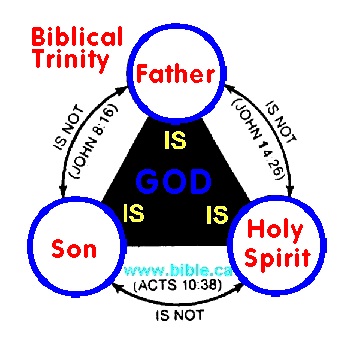
Above all guard for me this great deposit of faith for which I live and fight, which I want to take with me as a companion, and which makes me bear all evils and despise all pleasures:
I mean the profession of faith in the Father and the Son and the Holy Spirit.
I entrust it to you today. By it I am soon going to plunge you into water and raise you up from it. I give it to you as the companion and patron of your whole life.
I give you but one divinity and power, existing one in three, and containing the three in a distinct way. Divinity without disparity of substance or nature, without superior degree that raises up or inferior degree that casts down… the infinite co-naturality of three infinites.
Each person considered in himself is entirely God… the three considered together… I have not even begun to think of unity when the Trinity bathes me in its splendor.
I have not even begun to think of the Trinity when unity grasps me.
~St. Gregory of Nazianzus (325-389) – A Doctor of the Church whose theological work continues to influence modern theologians.
I tell you, my friends, do not be afraid of those who kill the body but after that can do no more. I shall show you whom to fear. Be afraid of the one who after killing has the power to cast into Gehenna; yes, I tell you, be afraid of that one.
Are not five sparrows sold for two small coins? Yet not one of them has escaped the notice of God. Even the hairs of your head have all been counted. Do not be afraid. You are worth more than many sparrows.
I tell you, everyone who acknowledges me before others the Son of Man will acknowledge before the angels of God.
But whoever denies me before others will be denied before the angels of God.
Luke 12: 4-9
Sept 7, 2012: Democrats Deny God Three Times [2:11]