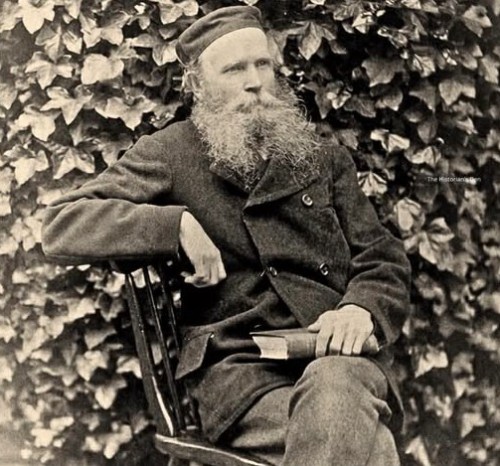
The man pictured is Dr. William Chester Minor (1834–1920), an American army surgeon who served during the American Civil War. Haunted by severe paranoia and hallucinations, likely what would today be diagnosed as schizophrenia, Minor moved to London in 1871 in search of peace. Instead, his mental state deteriorated, culminating in a tragic night in 1872 when, gripped by a delusion that an intruder had broken into his room, he chased and fatally shot an innocent English stoker named George Merrett. Minor was found not guilty by reason of insanity and committed to the ‘Broadmoor Criminal Lunatic Asylum’ in Berkshire, England. As he had his US Army pension and was judged not dangerous, he was given rather comfortable quarters and was able to buy and read books.
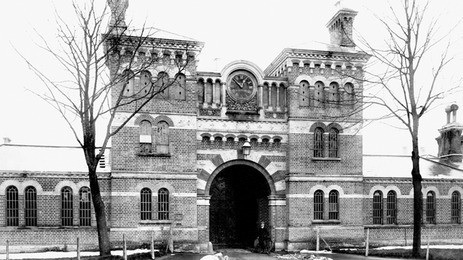
While confined at Broadmoor, Minor learned of a public appeal by James Murray, the primary editor of what would become the Oxford English Dictionary (OED). Murray was seeking volunteers to read books and submit quotations illustrating how specific words were used over time. Given a comfortable suite, his pension, and the ability to buy and store thousands of rare, antiquarian books, Minor dedicated his life to this literary crusade. He became one of the dictionary’s most prolific and meticulous contributors, providing over 10,000 highly precise source citations that helped shape the foundational text of the English language.
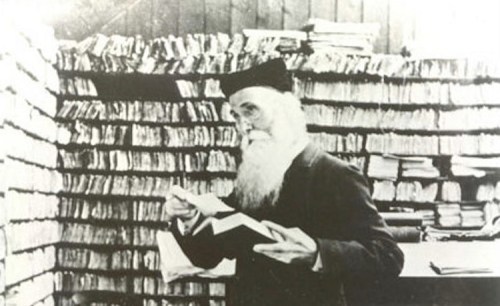
For nearly two decades, Minor and Murray corresponded solely by mail, with Minor using his personal address at Broadmoor rather than indicating it was an asylum. Murray deeply admired the mysterious “Dr. Minor” for his unparalleled academic rigor and eventually decided to visit him in person around 1896 to properly thank him. Upon arrival, Murray was astounded to discover that his star researcher was not a reclusive country gentleman, but an inmate in a high-security asylum for the criminally insane. Despite the shocking revelation, the two men formed a deep, respectful friendship, and Minor continued his contributions until his health severely declined in his later years.
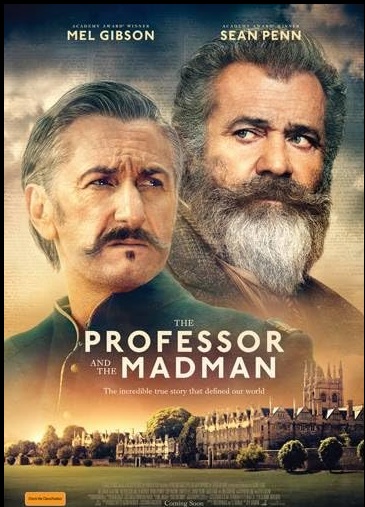
A profoundly poignant twist to this story is that Eliza Merrett, the widow of the man Minor killed, actually became one of his frequent visitors and a crucial lifeline. After learning of Minor’s genuine remorse and his worsening psychiatric torment, she forgave him, and the two struck up an extraordinary, empathetic connection.
Because Minor’s military pension left him quite wealthy inside Broadmoor, he provided regular financial support to Eliza and her children. In return, she would regularly travel to London bookshops on his behalf, purchasing and hand-delivering many of the rare, antiquarian volumes that Minor used to research his 10,000 definitions for the dictionary.